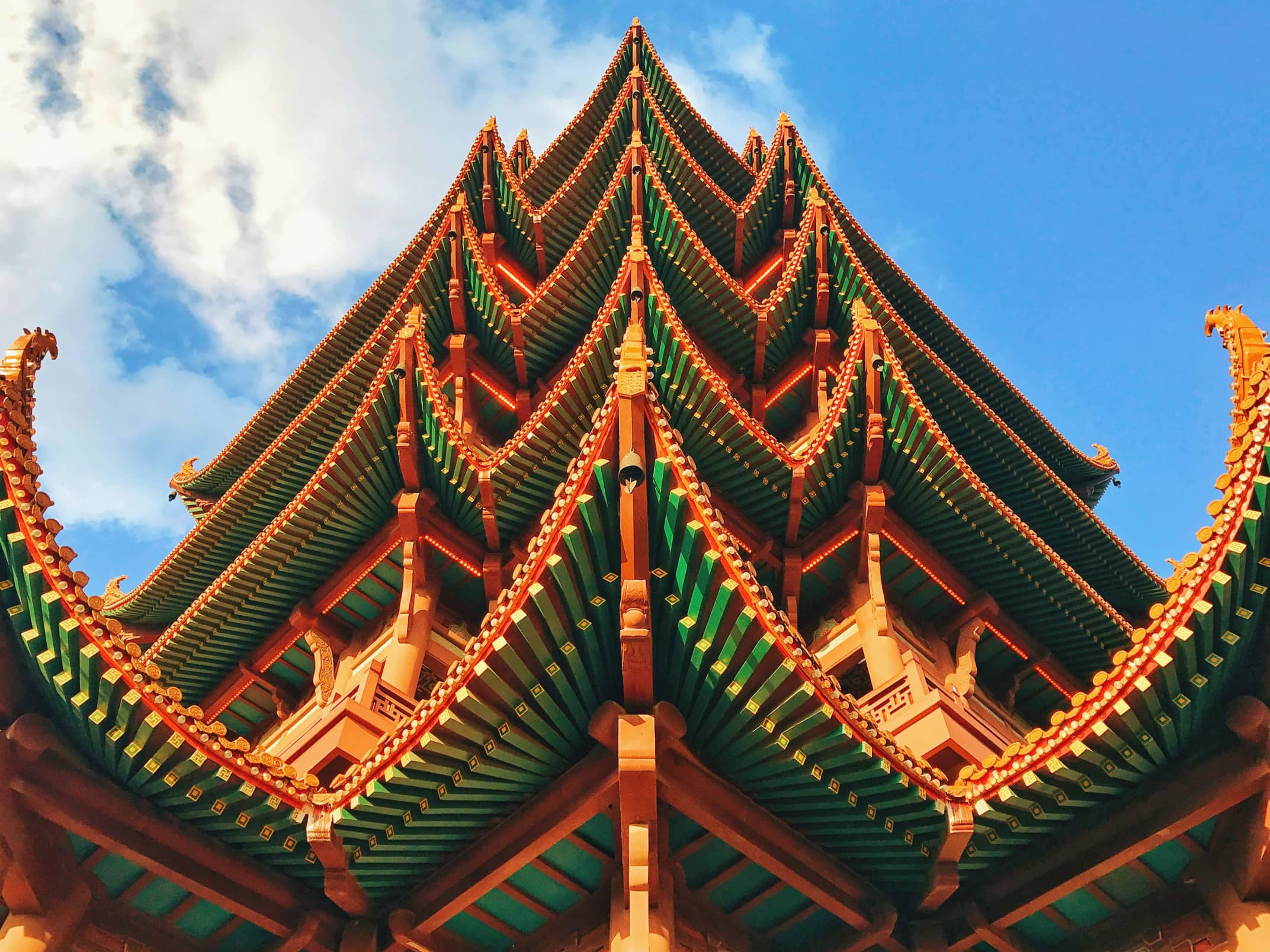
Guiyuan Temple in Wuhan,
Hubei, a major Buddhist site originally founded during the Qing
dynasty in 1658, is renowned for its association with the Chan (Zen)
tradition and houses a large collection of ancient scriptures,
statues, and stone carvings. Located in the Hanyang district, the
temple’s name—meaning 'Returning to the Origin'—reflects its
spiritual focus on enlightenment through inner reflection. The
temple’s exterior is marked by striking red-painted walls, upturned
eaves adorned with traditional Chinese roof decorations, and a
prominent incense burner placed before the entrance, where visitors
often pause for prayer. Stone-paved courtyards lead to the temple’s
halls, and decorative plaques bearing calligraphy are mounted above
doorways, adding to its solemn and historic atmosphere. Among its
notable features are the Hall of Arhats, containing over 500
intricate clay statues of Buddhist disciples, each with unique
expressions and postures, and the Grand Hall, where a towering
gilded statue of Sakyamuni Buddha draws visitors and worshippers
alike. Despite historical upheavals, the temple remains an active
centre for religious practice and cultural heritage in Wuhan.