|
|
|
|||||||||
 |
||||||||||
 |
||||||||||
 |
||||||||||
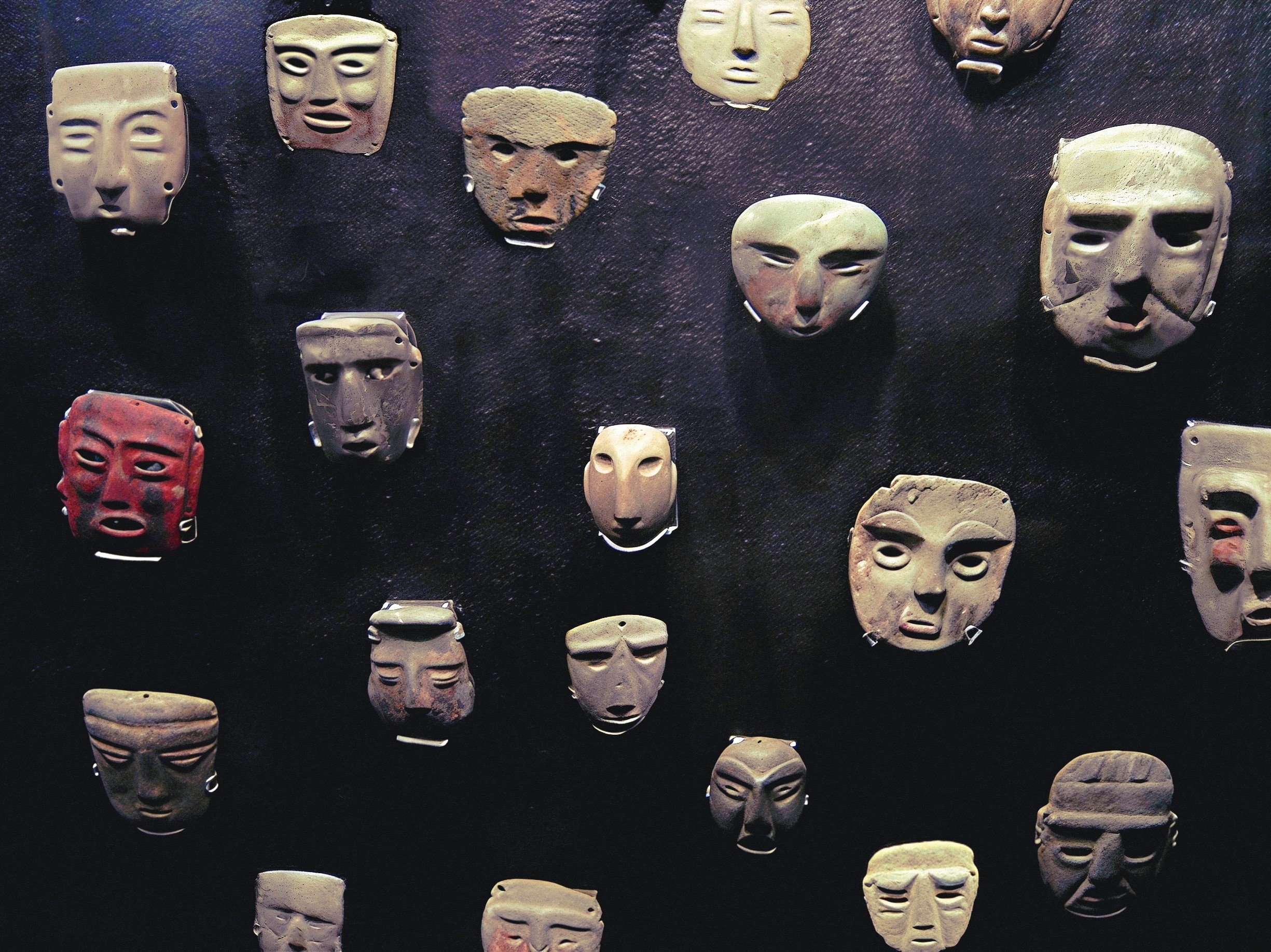
Stone votive masks Mezcala culture, 700 BC–AD 650 Templo Mayor, Mexico City |
||||||||||
| Situated in Mexico’s state of Guerrero, the Mezcala culture was centred in the Mezcala region and produced a wide range of stone sculptures. It coexisted with Teotihuacan, and while the nature and extent of contact remain debated, evidence suggests reciprocal cultural influence. Here, a group of votive or funerary masks attributed to the Mezcala tradition is characterised by small scale, schematic facial features, flattened planes, drilled perforations at the sides, and the use of stone in natural and pigmented tones. The masks bear features that scholars associate with deities such as Quetzalcoatl and Tlaloc, based on later Mesoamerican traditions. Some masks also bear glyphs on their posterior face, which in certain cases are thought to indicate a place of origin, while in others they are interpreted as signs referring to natural elements such as water, wind, and fire, as well as agricultural motifs and, in some instances, celestial references, though these readings cannot always be confirmed. |
||||||||||
  |
||||||||||