|
|
|
|||||||||
 |
||||||||||
 |
||||||||||
 |
||||||||||
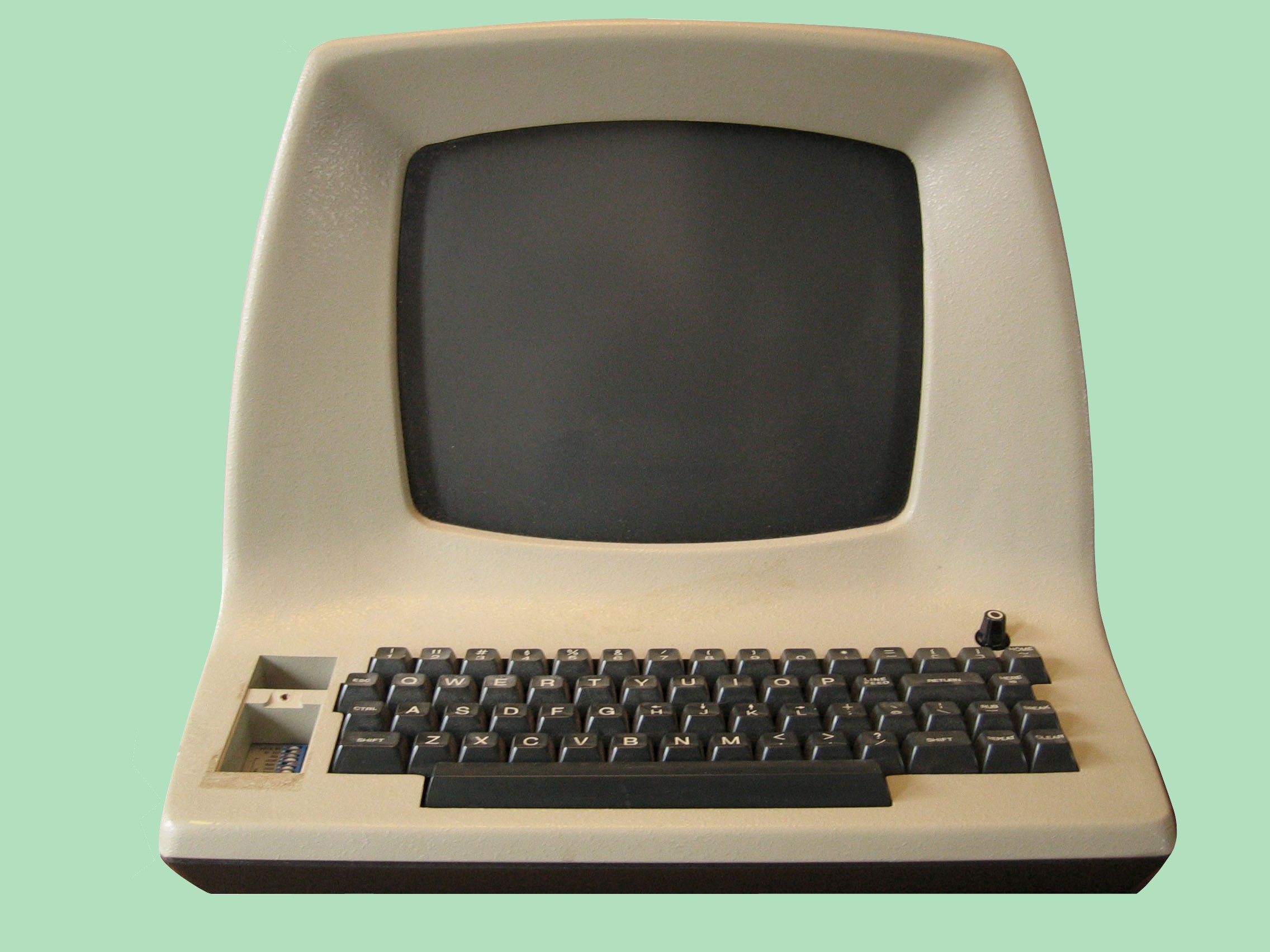
ADM-3A Lear Siegler terminal Image by Konrado Fedorczyko, 2004 |
||||||||||
|
Nicknamed the 'dumb terminal', the
ADM-3A was a popular video display terminal introduced by Lear
Siegler in 1976. It played a significant role in the early days of
personal computing, and was widely used in the late 1970s and early
1980s. Featuring a 12-inch monochrome CRT display capable of showing
12 lines of 80 characters each, it boasted a built-in ASCII keyboard
with 59 keys, including alphanumeric keys, function keys, and
control keys, and typically utilised a serial interface (RS-232) for
communication with host computers. Supporting the ASCII character
set, it offered a resolution of 72 columns by 20 rows of text and
various control codes for cursor positioning, screen clearing, and
other display functions. It was widely adopted for early
microcomputers and minicomputers, and it found popularity among
hobbyists, programmers, and businesses for tasks such as word
processing, data entry, and remote system access. Its compact,
rugged design made it suitable for office and industrial
environments, and despite being introduced in the mid-1970s, it
remained in use for years, becoming an iconic terminal in computing
history and influencing subsequent video display terminal designs
and early user interface standards. |
||||||||||
 |
||||||||||