Henry VII’s Book of
Astrology (Arundel MS. 66) was completed on 30 June 1490 and is
believed to have been made for him. This illuminated manuscript
contains astrological tables and treatises alongside other texts,
reflecting the late mediaeval and early Renaissance fascination with
astrology, divination, and celestial influences on earthly affairs.
Its decoration was executed by three artists, whose work ranges from
late 15th-century English painting to highly skilled Flemish-style
illustrations. An inscription names Johannes Wellys as the presumed
scribe. Given that Henry VII was the earliest English king known to
have a library, such a lavishly illustrated book on astrology would
have been a fitting addition, as celestial bodies were thought to
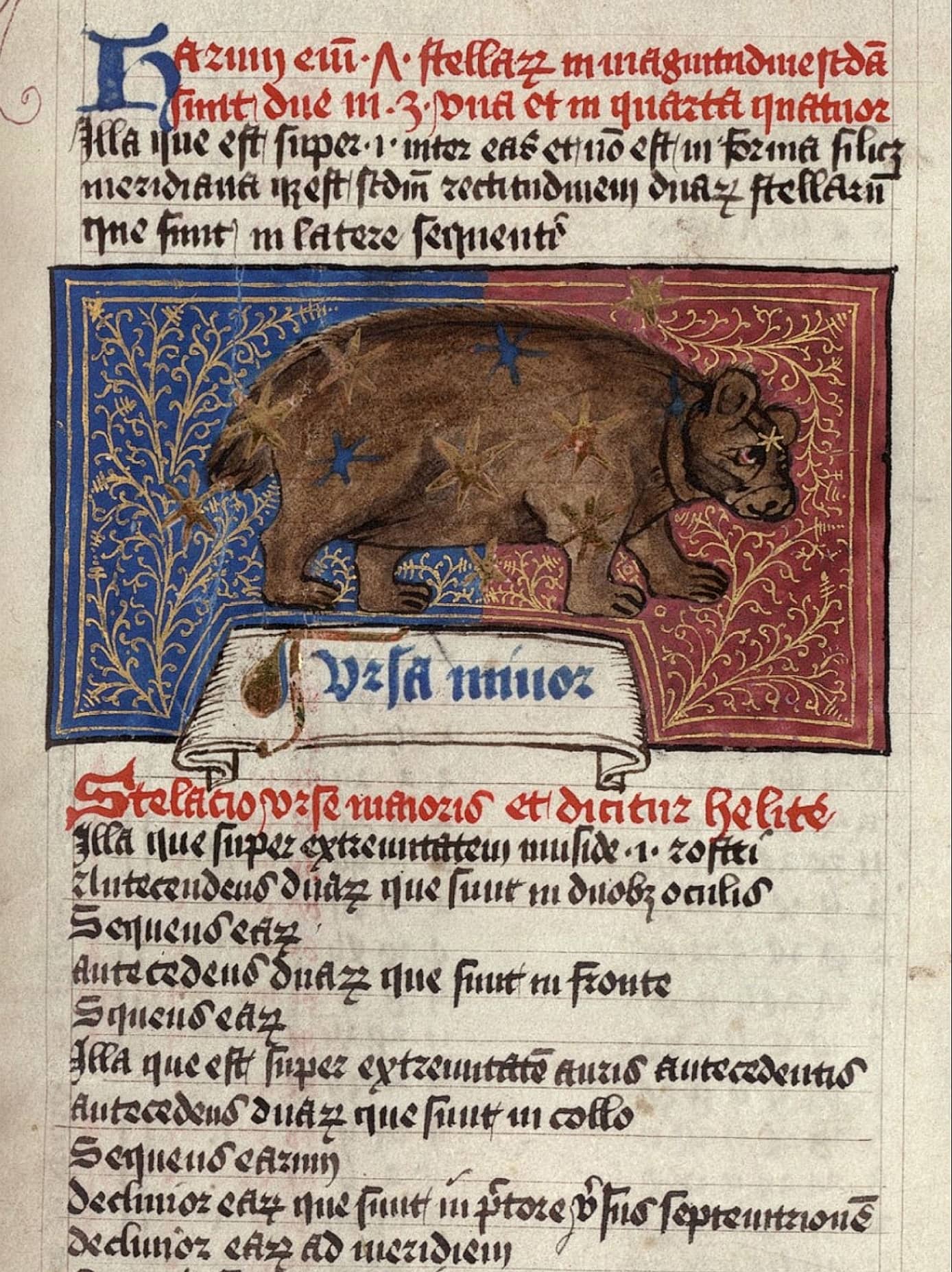
shape human character and events. Among its contents is a richly
decorated copy of the astronomical tables of King Alfonso X of Spain
(1221–1284), featuring gold-highlighted constellations and stars.
The tables detail the latitude and longitude of celestial bodies
throughout the year, beginning with Ursa Minor and Ursa Major at the
top of the sky, their respective columns adorned with paintings of
the bears. The manuscript may have been intended to legitimise Henry
VII’s rule through celestial omens or to guide his decisions based
on astrological principles. Its pages are lavishly decorated with
zodiacal symbols, planetary influences, and astrological charts.