
|
|
|
|||||||||
 |
||||||||||
| Hans Sebald Beham (1500–1550) | ||||||||||
|
Hans Sebald Beham, along with
his brother Barthel, was born in Nuremberg, and it is generally
believed—though not definitively proved—that they studied under Albrecht
Dürer. Whether or not that was truly the case, his influence on their
work is unmistakable. In 1524, both brothers were granted citizenship of
their native city and admitted as master craftsmen. Hans is best known
for his detailed engravings and woodcuts, which cover a surprisingly
broad range of themes. His ornamental prints were especially valued by
goldsmiths of the period, and many traditional German pottery jugs still
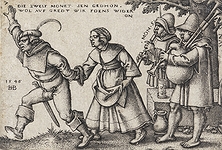
carry patterns clearly drawn from those designs. He also produced scenes
from everyday life that offer glimpses into the customs and habits of
the lower classes—records of the period which are of lasting interest.
Only one oil painting is securely attributed to him: a table-top
depicting episodes from the life of King David, now held in the Louvre.
The Library of Aschaffenburg holds a German missal once owned by
Cardinal Albert of Mainz, illustrated with miniatures by both Beham and
Nicholas Glockenton; five of the eight are thought to be Beham’s. His
output was extensive. Around 2,000 prints survive, and he also designed
playing cards, coats of arms, and wallpaper. |
||||||||||
| |
||||||||||

 |
||||||||||
|
|
||||||||||
| |
||||||||||
  |
||||||||||


 Art
Art