
|
|
|
|||||||||
 |
||||||||||
| William Wiehe Collins (1862–1951) | ||||||||||
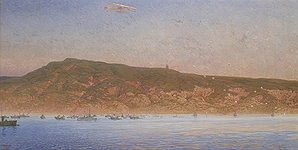
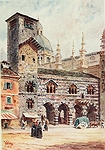
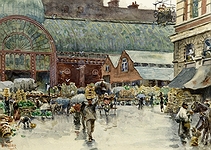
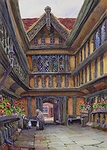
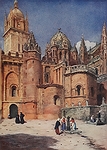
| Born in Kensington, London, Collins was a painter, watercolourist, and illustrator specialising in landscapes, seascapes, and flowers. His work often depicted historic architecture, bustling city scenes, and natural beauty, capturing the character of the places he visited. He studied at the Lambeth School of Art between 1884 and 1885, where he developed a strong foundation in drawing and painting, before continuing his artistic education in Paris at the Académie Julian between 1886 and 1887. Exposure to the French art scene influenced his approach, particularly in his handling of light and atmosphere. Throughout his career, Collins exhibited widely, including at the Royal Academy in London, the New Watercolour Society, the Society of British Artists, and the Royal Institute of Painters in Watercolours, of which he became a member. His works were highly regarded for their precision and ability to convey a sense of place, making him a sought-after illustrator for publications on architectural heritage. His paintings were published in various books, where his detailed yet expressive depictions of churches, townscapes, and landmarks brought these locations to life for a broad audience. Collins' illustrations not only documented the grandeur of these cities, but also captured the everyday life that unfolded around them. He continued to paint and exhibit throughout his life, leaving behind a body of work appreciated for its combination of technical skill and artistic sensibility. He died in London, having made a lasting contribution to British watercolour painting and architectural illustration. | ||||||||||
| |
||||||||||

 |
||||||||||
|
|
||||||||||
| |
||||||||||
  |
||||||||||


 Art
Art