|
|
|
|||||||||
 |
||||||||||
| Johann Nepomuk Ender (1793–1854) | ||||||||||
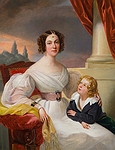
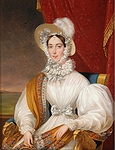
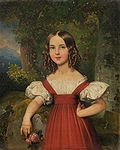
| Ender was an Austrian historical and portrait painter and engraver, born in Vienna. Showing artistic talent from a young age, he entered the Vienna Academy of Fine Arts in 1807, studying under Franz Caucig, Heinrich Friedrich Füger, Johann Baptist Lampi I, and Hubert Maurer, where he learnt drawing, composition, and painting techniques. His skill quickly gained recognition, earning him four prizes, including the gold medal for Minerva Showing Ithaca to Ulysses. Between 1816 and 1818, he focused mainly on portraiture, receiving commissions from prominent families such as the Hohenzollerns, Liechtensteins, Taxis, and Auerspergs. In 1819, after painting Count Stefan Széchenyi, Ender joined the count on a journey through Italy and Greece, visiting classical sites and producing a wide range of works, including costumes, landscapes, architecture, and portraits of envoys in Constantinople. In 1820, he went to Rome as an imperial pensioner of history painting, spending six years studying classical masterpieces and creating portraits and historical paintings. After travelling through Genoa, Milan, Geneva, Paris, Stuttgart, and Munich, he returned to Vienna, focusing on portraiture in the style of Jean-Baptiste Isabey. Elected professor at the Academy of Fine Arts in 1829, Ender taught until 1850 while continuing to produce works, with his final piece being the fresco of the Liechtenstein chapel in St Stephen’s Cathedral. Influenced by Peter Krafft and Léopold Robert, he was the twin brother of landscape painter Thomas Ender and the father of painter Eduard Ender. He worked across Germany, Italy, France, and Switzerland and died in Vienna. | ||||||||||
| |
||||||||||
|
|
||||||||||
| |
||||||||||
  |
||||||||||


 Art
Art