|


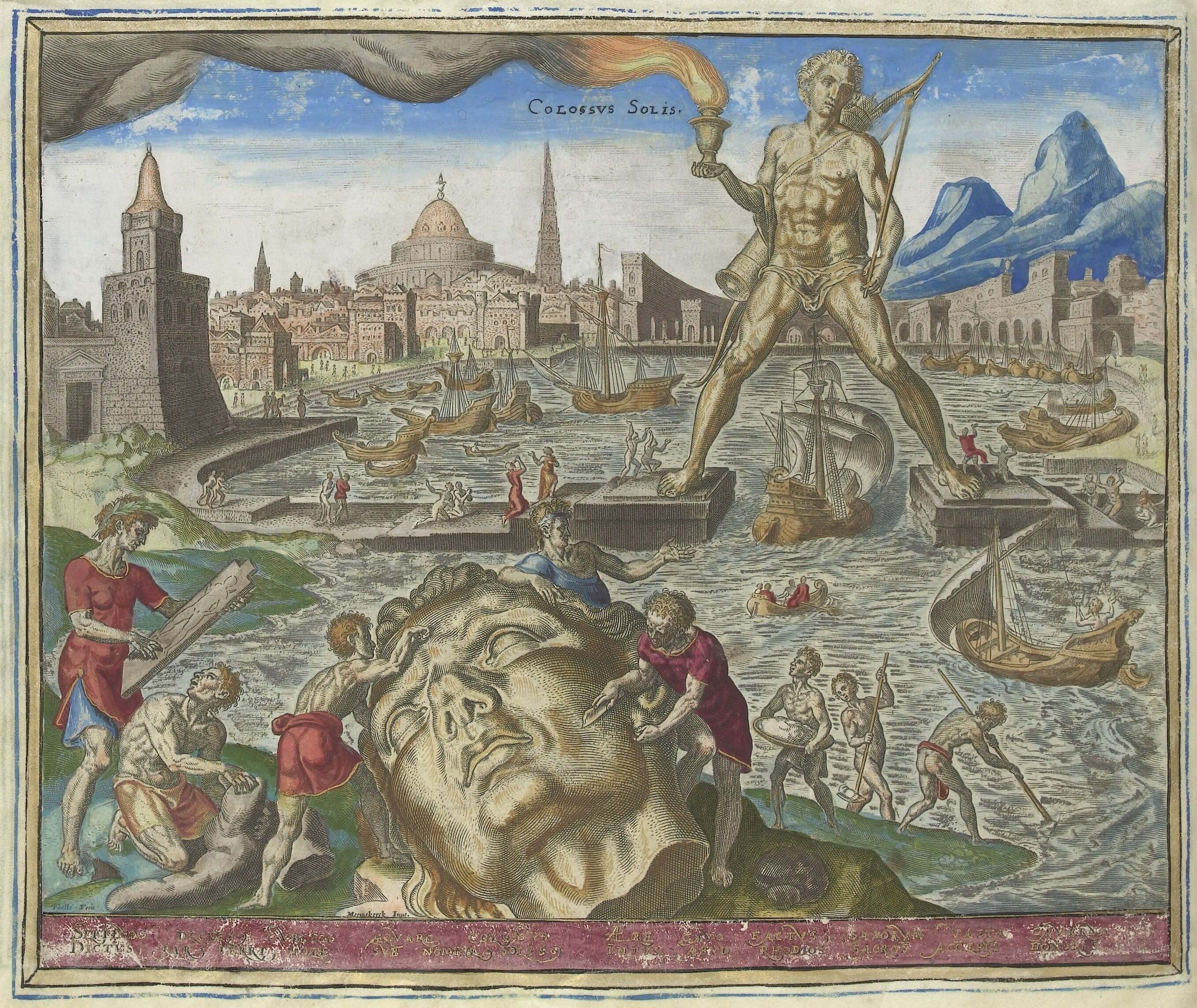
The Colossus of Rhodes
Engraving, by Philips Galle, after Maarten van Heemskerck, 1572
Rijksmuseum, Amsterdam
A gigantic bronze statue of the sun god Helios, the Colossus was erected
on the Greek island of Rhodes around 280 BC. Standing over 30 metres
tall, it was a symbol of the island's victory over the ruler of Cyprus.
Despite its celebrated status, the Colossus stood for only around
54 years before an earthquake in 226 BC caused it to collapse. It
was never rebuilt, but it left a lasting legacy through its depiction
in ancient texts and the enduring fascination it sparked in the imaginations
of later generations.


See Seven Wonders of
the World

|
|
|