
|
|
|
|||||||||
 |
||||||||||
| Jean-Baptiste Gautier-d'Agoty (1740–1786) | ||||||||||
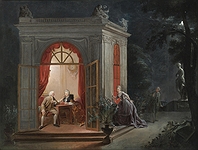
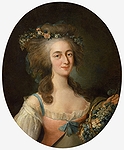
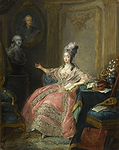
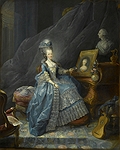
| Jean-Baptiste, a French portrait and genre painter, and engraver, was born into a family of artists in Paris. While now considered a minor figure in art history, his works were often confused with those of his father and brother. Trained under his father, he was later influenced by prominent artists such as François Boucher, who was closely associated with the French court. His career began early, quickly gaining the attention of Marie Antoinette, who made him her personal painter. His first portrait of the Queen, unveiled in 1775 at the Hall of Mirrors, was poorly received and sold in 1777. Known for his Rococo-style portraits of aristocrats, Jean-Baptiste’s works are characterised by delicate details, lightness, and elegance. However, they were often criticised for lacking personality, which contributed to his decline in prominence. In addition to portraits, he produced several engravings, which are often regarded more highly than his painted works. Following the French Revolution, his career suffered as royal patronage dwindled, and despite earlier success, he struggled to secure commissions, with his later works largely overlooked in art history. Jean-Baptiste worked in Nice, Paris, and Turin, where his time in Italy proved crucial in refining his technique, influenced by the Italian Renaissance and Baroque traditions. He was honoured as a knight of the Order of St John, earning the title 'Le Chevalier d'Agoty'. He died in Paris. | ||||||||||
| |
||||||||||
 |
||||||||||
|
|
||||||||||
| |
||||||||||
  |
||||||||||


 Art
Art