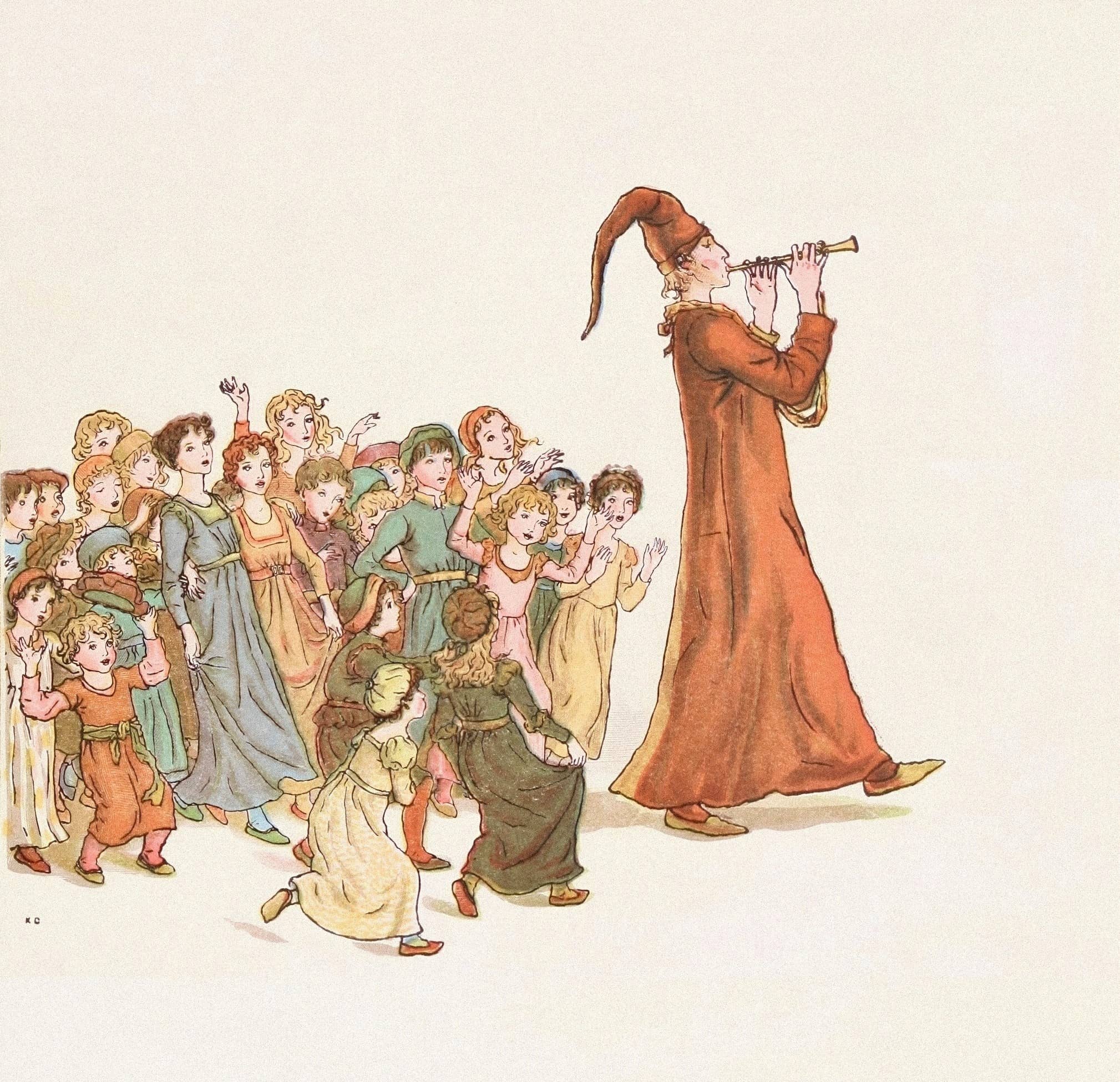
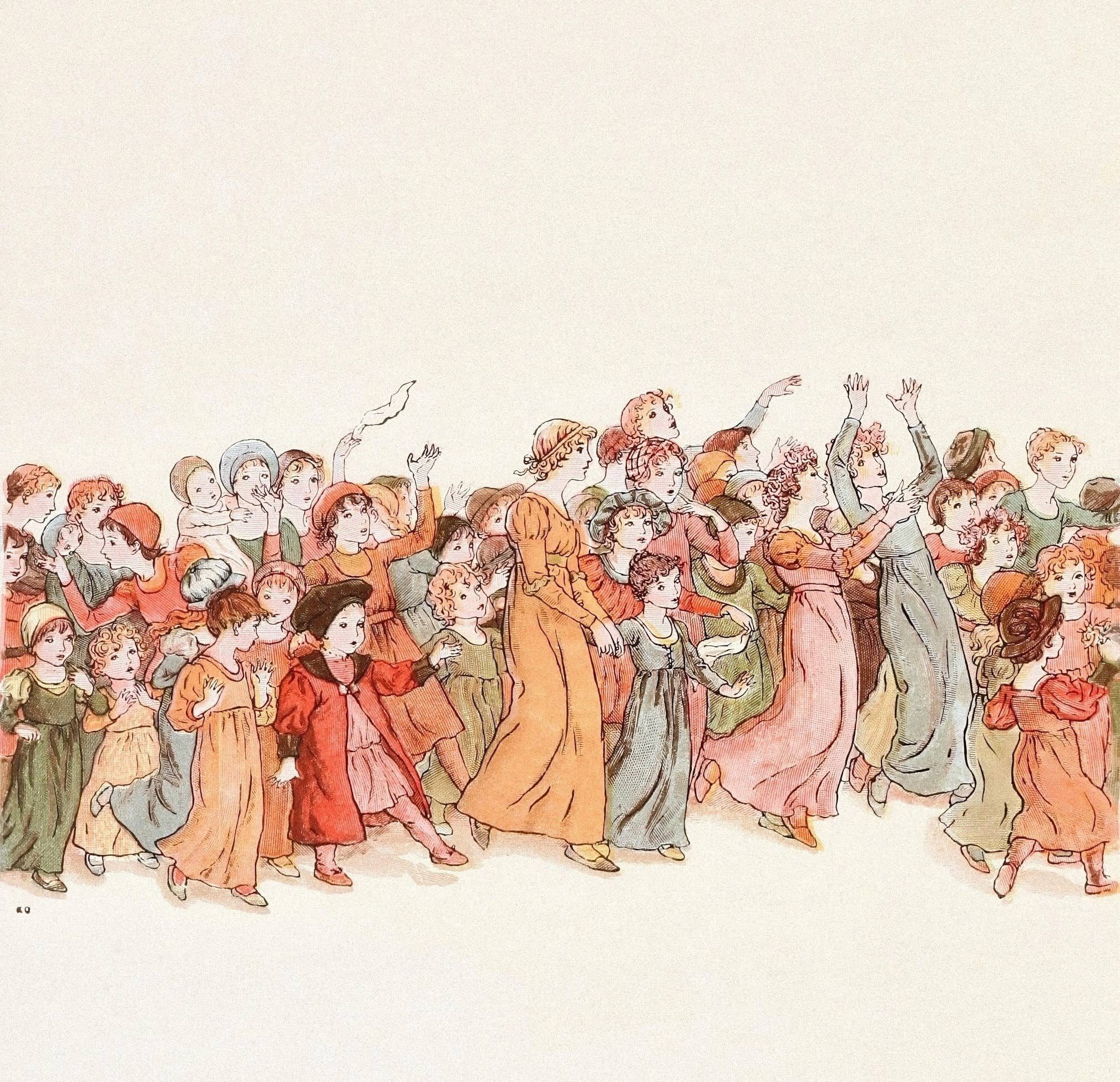
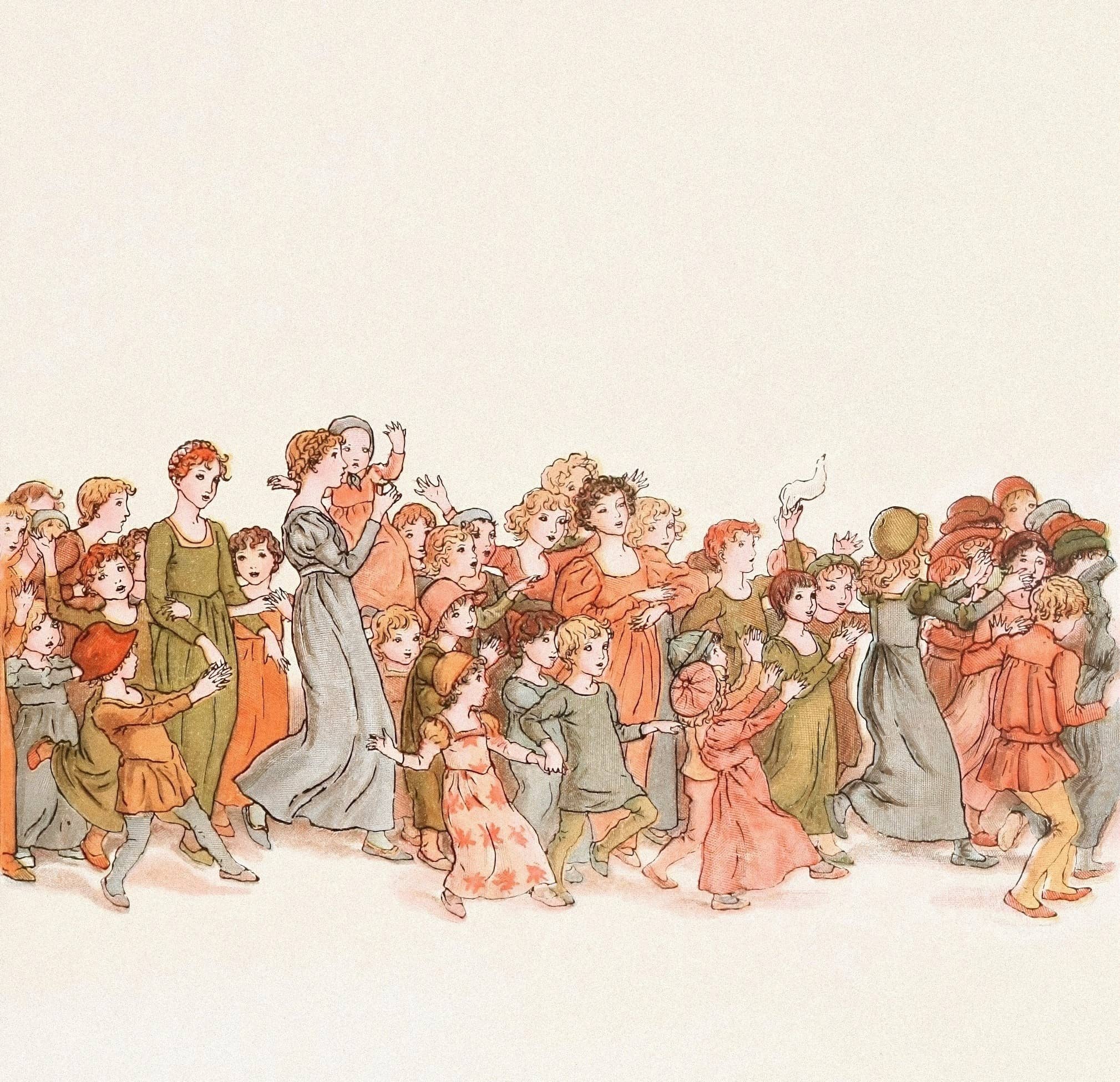
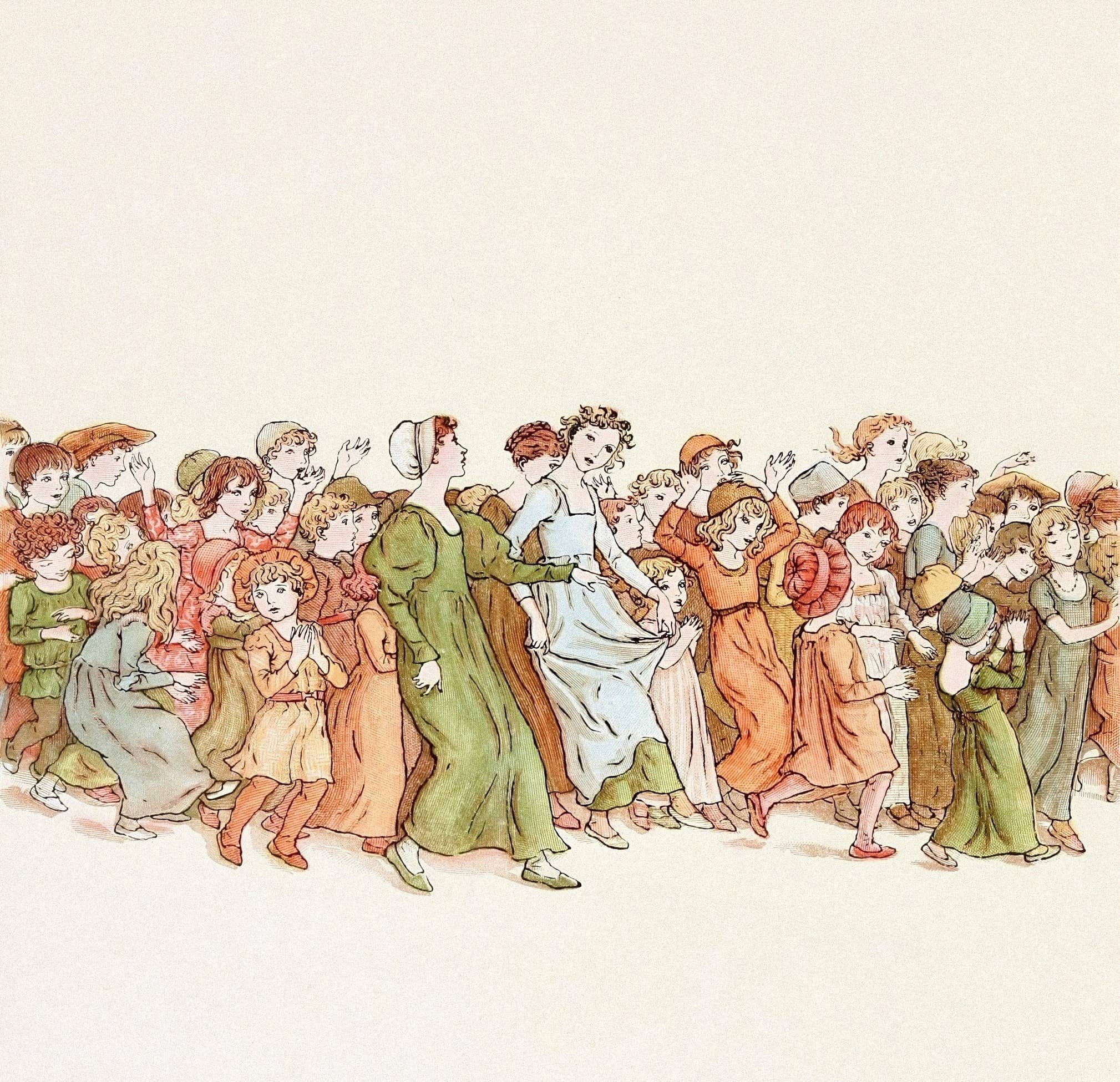
A tall, robed figure
strides forward, playing a pipe, while a crowd of children trails
behind, mesmerised. The children, dressed in soft-toned medieval
garments, reach out or gaze up at him, their faces marked by wonder
and trust. Flowing lines and muted colours give the scene a gentle,
almost dreamlike quality. Movement is central—his forward motion
contrasts with their eager following, suggesting both charm and
foreboding. The scene evokes an air of enchantment tinged
with unease, as something deeply unusual is unfolding. The story of
the Pied Piper originates from the town of Hamelin in Lower Saxony,
Germany. The earliest references date back to the 13th century, with
a particularly notable one in the town’s records from around 1284.
According to this account, a mysterious figure in multicoloured
clothing (the ‘pied’ piper) led away 130 children from Hamelin, and
they were never seen again. This event was first depicted without
the rat element, which was added centuries later. The original tale
appears to have been based on a real event or collective
trauma—possibly linked to emigration, disease, or even recruitment
during the medieval Ostsiedlung (eastward expansion). Over time, the
story evolved into folklore, with versions collected and retold by
figures such as the Brothers Grimm. The tale has since become a
cautionary narrative about broken promises and consequences.