|
|
|
||||||||||
 |
|||||||||||
 |
|||||||||||
 |
|||||||||||
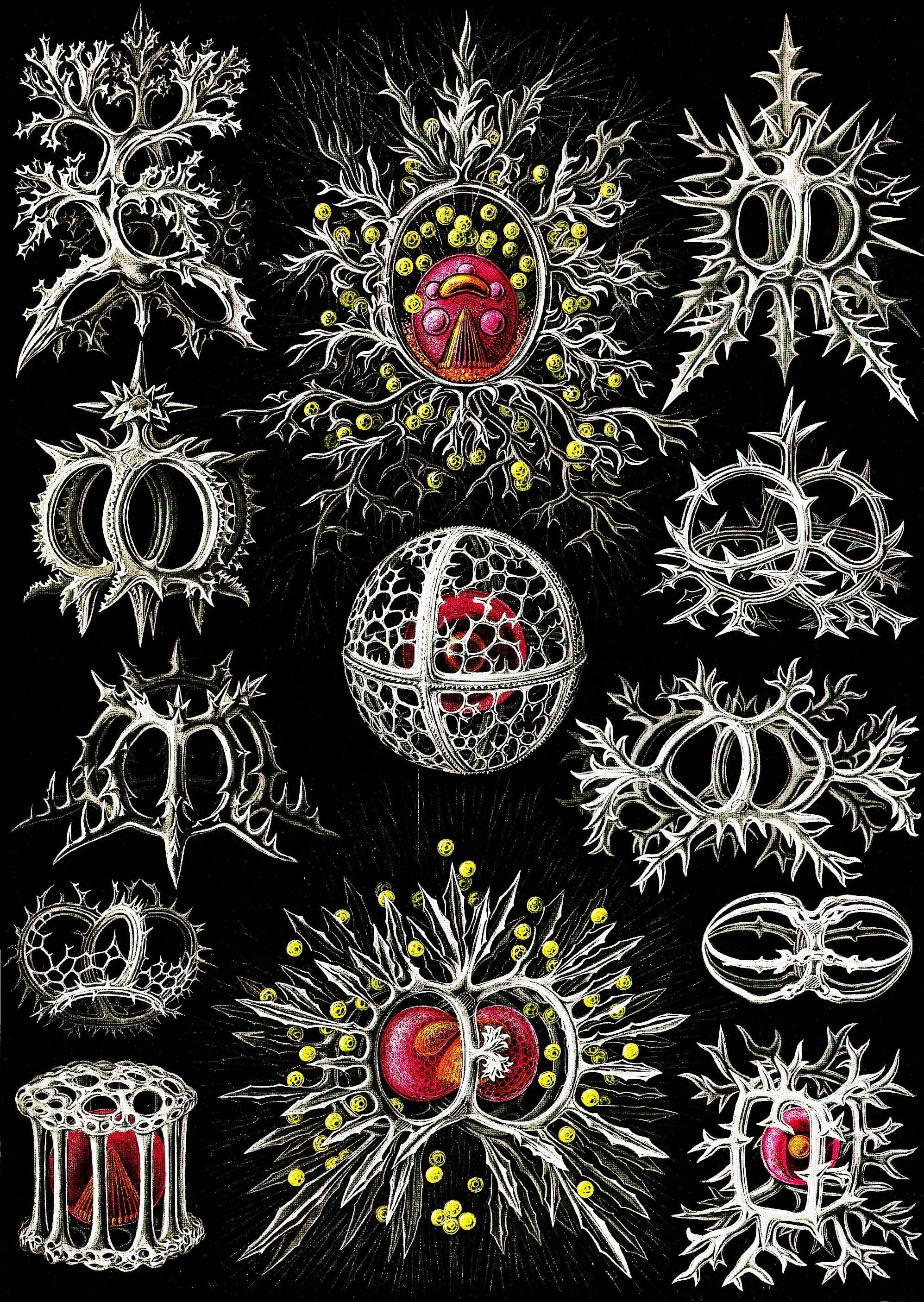
Stephoidea (Radiolaria) Lithograph, by Ernst Haeckel, published 1904 |
|||||||||||
| Stephoidea is a superorder of radiolarians within the phylum Radiolaria, a group of single-celled marine protists characterised by intricate mineral skeletons made of silica that often appear as spheres, lattices, or spiny geometric forms and are found throughout the world’s oceans from surface waters to the deep sea; they are ecologically important as part of the planktonic community, serving as prey for larger zooplankton and small fish while also contributing to nutrient cycling, and when they die their silica skeletons accumulate on the seafloor as radiolarian ooze that becomes part of the geological record, while their reproduction is not fully understood it is known that they reproduce asexually through binary fission and that some groups also undergo sexual reproduction involving gametes. |
|||||||||||
|
|
|||||||||||
|
|
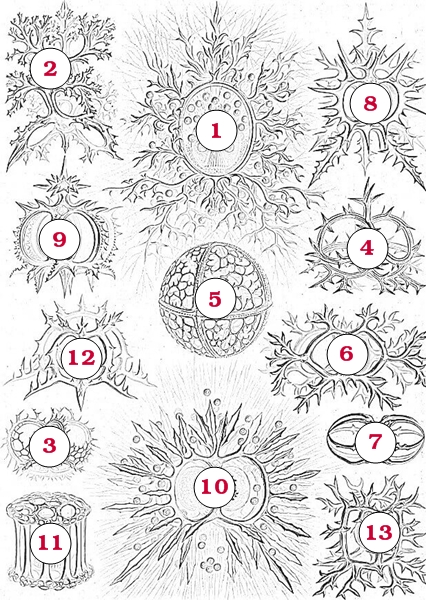
1.
Lithocircus magnificus (Lithocircus sp.?), live |
||||||||||
 |
|||||||||||