|
|
|
|||||||||
 |
||||||||||
| Heyerdahl (1857–1913) | ||||||||||
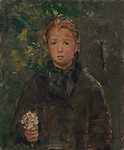
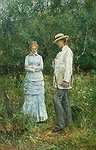
| A Norwegian Realist genre artist, Heyerdahl, was born in Smedjebacken, Sweden, and grew up in Drammen. Considered one of the leading artists of his generation, he began his studies in 1873 at the Royal School of Drawing in Kristiania (now Oslo), under landscape painter Peder Cappelen Thurmann. The following year, he continued his education at the Academy of Fine Arts in Munich, where he studied alongside painter Eilif Peterssen. There, his teacher Ludwig von Löfftz encouraged him to focus on figure painting rather than landscapes, and another of his instructors, Wilhelm Lindenschmit the Younger, further shaped his artistic approach. In 1878, Heyerdahl attended the world exhibition in Paris and was awarded a third prize for his painting Adam and Eve. He stayed in Paris until 1882, studying under Léon Bonnat and working as a copyist at the Louvre. In 1879, he exhibited a portrait of composer Johan Svendsen at the Salon des Beaux-Arts in Paris, a work that reflected the influence of Bonnat. In 1882, he won the Le Grand Prix de Florence for his painting A Nymph Talking to a Starling. By 1884, he had settled in Kristiania, where he co-founded a painting school with Christian Krohg and Erik Werenskiold. By 1890, Heyerdahl was recognised as a distinguished and accomplished painter, particularly known for his portraits. Later, he shifted his focus to Nordic legendary themes, drawing influence from British Symbolist art, though this new direction met with criticism. Between 1900 and 1907, he lived in Paris again. Technically skilled and talented, Heyerdahl was admired for his naturalistic style and his masterful use of colour and contrast. Edvard Munch is said to have drawn inspiration from him. He died in Kristiania, and in 1914, a memorial exhibition was held in his honour in the city. | ||||||||||
| |
||||||||||
|
|
||||||||||
| |
||||||||||
  |
||||||||||


 Art
Art