|
|
|
|||||||||
 |
||||||||||
| Martin Johnson Heade (1819–1904) | ||||||||||
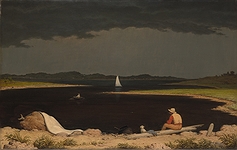
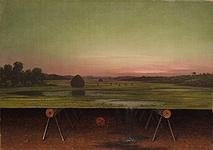
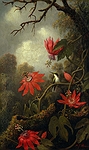
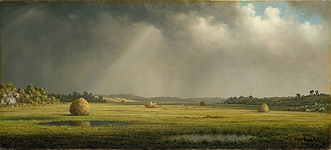
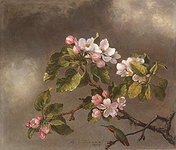
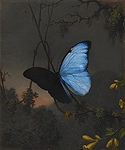
| Born in 1819 in Lumberville, Pennsylvania, Heade was an American luminist painter best known for his landscapes, seascapes, still lifes, and depictions of birds and flowers, as well as his work as a botanist. He began his artistic journey studying under local artists, including Thomas Hicks, before honing his skills in New York City. Though he initially focused on portraits, his move to New York in the 1850s marked a shift towards landscapes and dramatic coastal scenes, often associated with the Hudson River School. As his career progressed, Heade’s approach grew more romantic and emotive. He travelled widely, with significant time spent in Brazil and Jamaica, where he produced his renowned series of hummingbirds and orchids. These travels allowed him to capture exotic species in vivid colours, blending art with a near-scientific precision. He also spent several years in Italy, England, and France, which deepened his artistic perspective. In 1883, he settled in Florida, dedicating himself to botanical painting with a more scientific focus for the remainder of his life. Despite his significant output, his work was largely overlooked after his death in St Augustine, in part due to his absence from the New York art scene. Heade's reputation, however, experienced a revival in the 1940s, and today, he is recognised as one of the most distinctive and influential American painters of his era. | ||||||||||
| |
||||||||||
|
|
||||||||||
| |
||||||||||
  |
||||||||||


 Art
Art