
|
|
|
|||||||||
 |
||||||||||
| Henry Lamb (1883–1960) | ||||||||||
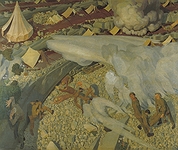
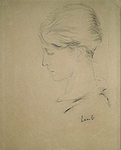
| Born in Adelaide, South Australia, Lamb was an English realist painter best known for his portraits. His father, a professor at the University of Adelaide, moved the family to England in 1885. Raised in Manchester, he studied medicine at Manchester University before deciding to pursue art after a visit to Italy in 1904. He moved to London in 1905 and studied at an art school run by Augustus John and William Orpen, with John influencing his early style. He also studied in Paris at La Palette under Jacques-Émile Blanche from 1907 to 1908. Lamb set up a studio in London in 1909 and first exhibited at the New English Art Club that year. A founding member of the Camden Town Group in 1911 and the London Group in 1913, he returned to medicine during World War I and qualified as a doctor in 1916. He served as a battalion medical officer in Macedonia, Palestine, and France before being gassed and sent home. After the war, Lamb returned to painting, developing a distinct style marked by modern realism and raw, sometimes grotesque, portrayals. While largely unaffected by French contemporary art and the Bloomsbury group, he did maintain links with them, with a 1914 portrait of Lytton Strachey drawing public attention in 1922. He painted many prominent figures, but had a particular fondness for children, including his own in family portraits. Later in life, he shifted from landscapes to still life due to health issues, and some of his work reflected his wartime experiences. During World War II, Lamb was an official war artist, painting portraits of servicemen and foreign military attachés. Elected a member of the Academy of Realist Art in 1940 and the Royal Academy in 1949, he died in Salisbury. | ||||||||||
| |
||||||||||

 |
||||||||||
  |
||||||||||


 Art
Art