
|
|
|
|||||||||
 |
||||||||||
| Thomas de Leu (c. 1555–c. 1612) | ||||||||||
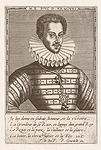
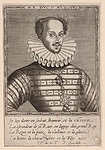
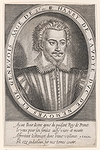
| Born in Oudenaarde, Flanders, de Leu was an engraver, draughtsman, print publisher, and print seller. His works spanned historical, religious, mythological, and allegorical themes, and he contributed illustrations to various publications. He began his career in Antwerp under Jean Ditmaer before moving to France after 1576 to study with Jean Rabel, where he became closely involved in the city's artistic and political circles. Later, he studied under Antoine Caron and married his daughter in 1583. Initially, de Leu engraved in a dry style influenced by artists like Cornelis Cort, Sadeler, and Wierix, but he soon shifted to portraiture, establishing himself as one of the leading portrait artists of his time, producing over 300 portraits of contemporary figures. His portraits are known for their formal symmetry and focus on facial features, often framed by elaborate costumes or heraldic motifs. In his later years, de Leu's work turned towards devotional imagery, catering to a Catholic audience in post-League Paris. These works retained a devotional tone, with balanced compositions and clear iconography supporting Catholic themes during the Counter-Reformation. Throughout his career, his engravings were marked by an emphasis on legibility and decorum rather than expressive flourishes, aligning with the preferences of Parisian patrons and publishers. De Leu died in Paris. | ||||||||||
| |
||||||||||
 |
||||||||||
|
|
||||||||||
| |
||||||||||
  |
||||||||||


 Art
Art