
|
|
|
|||||||||
 |
||||||||||
| Pieter Paul Rubens (1577–1640) | ||||||||||
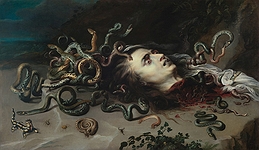
| Rubens, born in Siegen, Westphalia, became one of the most celebrated Flemish painters of his time. His father fled Antwerp in 1587 due to religious persecution, and after his death, Rubens returned to Antwerp with his mother. He received a classical education and studied painting under Tobias Verhaecht, Adam Van Noort, and Otto Vaenius. By 1598, he was recognised as a master and soon travelled to Italy under the patronage of the Duke of Mantua. His time in Italy exposed him to Raphael, Titian, and Michelangelo, influencing his early works. Returning to Antwerp in 1608 upon hearing of his mother's illness, Rubens' career took a decisive turn. He was appointed court painter in 1609, freeing him from guild restrictions. This position, along with municipal commissions, established his standing as the leading artist in Antwerp. His early works, including grand altarpieces and monumental ceiling paintings for the Jesuit church, reflected his mastery of composition and drama. By the 1620s, Rubens had gained international renown, with commissions spanning Europe. His large-scale compositions, often created with studio assistance but refined by his hand, secured his reputation as the most sought-after painter. In addition to his artistic career, he played a key role in diplomacy, negotiating between Spain, the Netherlands, England, and France. He earned a knighthood in 1630 and continued producing masterpieces. Despite suffering from gout, his studio produced hundreds of paintings, with many sent to Madrid. Though his later diplomatic efforts were met with suspicion and political unrest, his artistic legacy remained strong. Rubens died, leaving a lasting impact on Flemish painting, engraving, and sculpture. His students carried on his teachings, but none could match his mastery, ensuring his place as one of the great Baroque artists. | ||||||||||
| |
||||||||||


 |
||||||||||
|
|
||||||||||
| |
||||||||||
  |
||||||||||


 Art
Art