
|
|
|
|||||||||
 |
||||||||||
| Jan Sadeler I (1550–1600) | ||||||||||
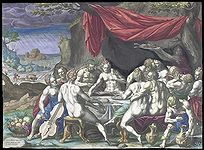
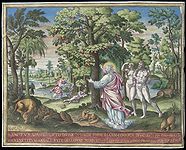
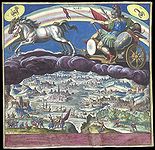
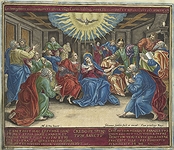
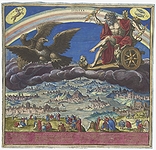
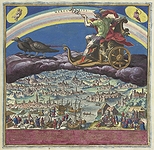
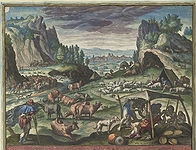
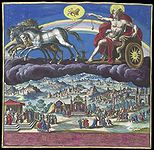
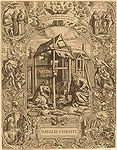
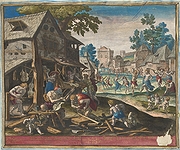
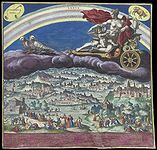
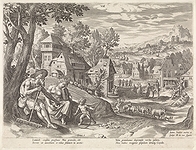
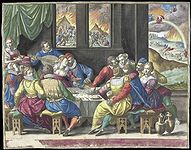
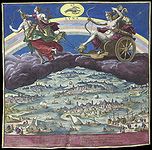
| Sadeler, a pioneering Flemish engraver from a family of artists, was born in Brussels. His father, who specialised in engraving ornaments on steel and iron to be inlaid with gold or silver, trained him in the same trade. However, from a young age, he focused on studying the human figure, drawing it with accuracy, though in the stiff, formal style of the time. It wasn’t until he was nearly twenty that he began engraving on copper, starting with plates based on designs by Crispin Van den Broeck. These works were well-received, encouraging him to dedicate himself fully to engraving. Sadeler travelled across Germany and to Italy, where he refined his technique, moving away from the dry, rigid style of his early work. His engravings, executed solely with the graver, were now neat and clear. His drawing was typically accurate, and there was a strong expression in his portraits. Sadeler became one of the most influential figures in late 16th-century European printmaking, and, having trained his sons Raphael and Jan II, he established a family workshop tradition that would continue to shape the craft well into the 17th century. He died in Venice, leaving behind a large body of work that included religious subjects, portraits, and reproductions of paintings by contemporary masters. | ||||||||||
| |
||||||||||


|
||||||||||
|
|
||||||||||
| |
||||||||||
  |
||||||||||


 Art
Art