
|
|
|
|||||||||
 |
||||||||||
| Albert Jansz. Vinckenbrinck (1605–1665) | ||||||||||
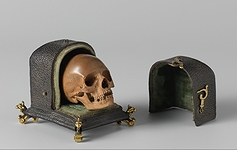
| Vinckenbrinck was born in Spaarndam, and lived in Amsterdam, where he became a prominent sculptor during the Dutch Golden Age. He was trained by his father, Jan Albertsz. Vinckenbrinck, a wood craftsman originally from East Frisia. There is no record of formal academic study or guild apprenticeship beyond this familial instruction, which was typical for many artisans of the period. His early exposure to woodworking through his father’s trade likely shaped his later mastery of small-scale sculpture and relief carving. Vinckenbrinck's work is marked by finely executed detail and a strong narrative impulse, often exploring religious or moral subjects through compact, expressive compositions. Working primarily in palmwood and boxwood, he developed a distinctive approach that combined the clarity of Northern realism with a sculptural rhythm suited to intimate, contemplative viewing. His carvings reveal a sensitivity to texture and gesture, favouring dynamic yet balanced arrangements that resonated with the devotional and intellectual interests of his patrons. Vinckenbrinck died in Amsterdam. | ||||||||||
. |
||||||||||
| |
||||||||||

 |
||||||||||
|
|
||||||||||
| |
||||||||||
  |
||||||||||


 Art
Art