|

|
UC Picture Gallery
 |
|
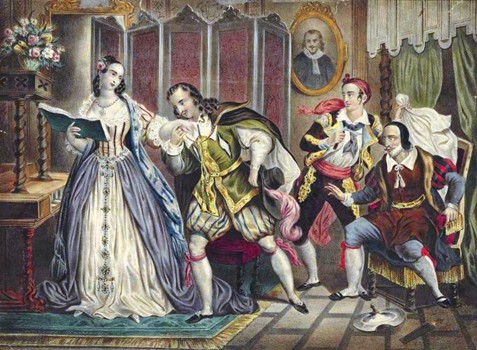
The Barber of Seville
Gioachino Rossini's The Barber of Seville, an opera
in two acts, is a whirlwind of romantic chaos, bursting
with music that perfectly complements the onstage antics.
Count Almaviva, hopelessly smitten with the beautiful Rosina,
finds his path to her heart blocked by her grumpy guardian,
Dr Bartolo, who intends to marry her himself. Enter Figaro,
the charming and resourceful barber of Seville, who becomes
Almaviva's confidante and chief strategist. With lightning-fast
wit and an arsenal of clever disguises, Figaro orchestrates
a series of schemes to outwit Bartolo. Almaviva serenades
Rosina from her balcony under a variety of guises - a lovesick
student, a drunken soldier, even a music teacher. Figaro
himself feigns illness to gain entry to Bartolo's house,
creating further opportunities for the Count to woo Rosina.
Through it all, the music soars, with Rossini's signature
melodies perfectly capturing the characters' emotions -
the Count's ardent longing, Rosina's playful defiance, and
Figaro's frenetic energy. The opera culminates in a hilarious,
fast-paced finale where the web of schemes unravels, leaving
Bartolo outsmarted and Rosina free to choose her true love.
The opera is a masterpiece of buffa style. Rossini employs
rapid-fire recitative to keep the pace moving and heighten
the comedic effect. His signature bel canto melodies, characterised
by ornate vocal lines and challenging agility for the singers,
portraying vividly each character's role in the story. The
score also utilises well-timed orchestral flourishes to
emphasize the action onstage. Whether it's a dramatic crescendo
during a tense moment or a playful pizzicato sequence for
Figaro's scheming, the orchestra becomes an active participant
in the story. Opera buffa in two act. The libretto, by Cesare
Sterbini, is based on the 1775 comedy play La précaution
inutile, ou Le barbier de Séville by Pierre-Augustin
Caron de Beaumarchais and on the libretto Il barbiere
di Siviglia, ovvero La precauzione inutile by Giuseppe
Petrosellini, from which Giovanni Paisello composed his
own opera by the same name in 1782. Rossini's opera was
known previously as Almaviva, ossia La precauzione inutile.
It premiered at the Teatro di Torre Argentina, Rome, on
the 20th February 1816.
|
| |
The
Opera |
| Characters |
|
Name |
Description |
Voice
Type |
Premiere
Cast |
|
Count Almaviva |
nobleman under the guise of 'Lindoro' |
tenor |
Manuel
Garcia |
|
Bartolo |
doctor
and guardian to Rosina |
bass |
Bartolomeo
Botticelli |
|
Rosina
|
ward
of Bartolo |
mezzo-soprano/
contralto |
Geltrude
Righetti-Giorgi |
|
Figaro |
barber |
baritone |
Luigi
Zamboni |
|
Basilio |
Rosina's
music tutor |
bass |
Zenobio
Vitarelli |
|
Berta |
maid
to Bartolo |
soprano
|
Elisabetta
Loyselet |
|
Fiorello |
servant
to Almaviva |
bass |
Paolo
Biagelli |
|
Ambrogio |
servant
to Bartolo |
bass
|
|
|
Chorus of an official, a magistrate, a notary public, police,
soldiers, musicians |
| Setting |
|
Seville |
| Acts |
|
Overture |
|
Act
I |
Role |
|
1 |
Introduction |
'Piano, pianissimo' |
Fiorello, chorus, Count |
|
2 |
Cavatina |
'Ecco ridente in cielo' |
Count, Fiorello, chorus |
|
3 |
Recitative |
'Gente indiscreta!' |
Count, Fiorello, Figaro |
|
4 |
Cavatina |
'Largo al factotum' |
Figaro |
|
5 |
Recitative |
'Ah, ah! che bella vita!' |
Figaro, Count, Bartolo |
|
6 |
Canzone |
'Se il mio nome saper voi bramate' |
Count, Rosina, Figaro |
|
7 |
Recitative |
'Oh cielo!/Nella stanza' |
Count, Figaro |
|
8 |
Duet |
'All'idea di quel metallo' |
Figaro, Count |
|
9 |
Cavatina |
'Una voce poco fa' |
Rosina |
|
10 |
Recitative |
'Si, si, la vincerò.' |
Rosina, Figaro, Bartolo, Basilio |
|
11 |
Aria |
'La calunnia è un venticello' |
Basilio |
|
12 |
Recitative |
'Ah! che ne dite?' |
Basilio, Bartolo, Figaro, Rosina |
|
13 |
Duet |
'Dunque io son...tu non m'inganni?' |
Rosina, Figaro |
|
14 |
Recitative |
'Ora mi sento meglio' |
Rosina, Bartolo |
|
15 |
Aria |
'A un dottor della mia sorte' |
Bartolo |
|
16 |
Recitative |
'Finora in questa camera' |
Berta, Count |
|
17 |
Finale I |
'Ehi, di casa!...buona gente!' |
Count, Bartolo, Rosina, Berta, Basilio, Figaro, an official,
chorus, all |
|
Act
II |
Role |
|
1 |
Recitative |
'Ma vedi il mio destino!' |
Bartolo |
|
2 |
Duet |
'Pace e gioia sia con voi.' |
Count, Bartolo |
|
3 |
Recitative |
'Insomma, mio signore' |
Bartolo, Count, Rosina |
|
4 |
Aria |
'Contro un cor che accende amore' |
Rosina, Count |
|
5 |
Recitative |
'Bella voce! Bravissima!' |
Count, Rosina, Bartolo |
|
6 |
Arietta |
'Quando mi sei vicina' |
Bartolo |
|
7 |
Recitative |
'Bravo, signor barbiere' |
Bartolo, Figaro, Rosina, Count |
|
8 |
Quintetto |
'Don Basilio!/Cosa veggo!' |
Rosina, Count, Figaro, Bartolo, Basilio, all |
|
9 |
Recitative |
'Sempre gridi e tumulti' |
Berta |
|
10 |
Aria |
'Il vecchiotto cerca moglie' |
Berta |
|
11 |
Recitative |
'Dunque voi Don Alonso non conoscete' |
Bartolo, Basilio, Rosina |
|
12 |
Thunderstorm |
|
[orchestra] |
|
13 |
Recitative |
'Alfine, eccoci qua.' |
Figaro, Count, Rosina |
|
14 |
Trio |
'Ah! qual colpo inaspettato!' |
Rosina, Figaro, Count |
|
15 |
Recitative |
'Ah! Disgraziati noi!' |
Figaro, Count, Rosina, Basilio, Bartolo, an official |
|
16 |
Instrumental Recitative |
'Il Conte!' |
Bartolo, Count |
|
17 |
Aria |
'Cessa di più resistere' |
Count, chorus |
|
18 |
Recitative |
'Insomma, io ho tutti i torti' |
Bartolo, Figaro, Basilio, Rosina, Count |
|
19 |
Finaletto II |
'Di sì felice innesto' |
Figaro, Rosina, Count, all |
 |
Sources:
1. Gioachino Rossini, Il barbiere di Siviglia [CD].
Allen, Baltsa, Araiza, Trimarchi, Lloyd et al, Academy of
St Martin-in-the-Fields, conducted by Neville Marriner, recorded
1983, Philips Digital Classics, 1995.
2. C. Osbourne. The Bel Canto Operas of Rossini, Donizetti,
and Bellini. Portland, Or.: Amadeus Press, 1994.
3. E. Rescigno, ed. Il barbiere di Siviglia: libretto
di Cesare Sterbini. Milan: G. Ricordi & C. S.p.A,
1988.
Translation by Rosa Nardi
|
|
|
|


