|

|
UC Picture Gallery
 |
|
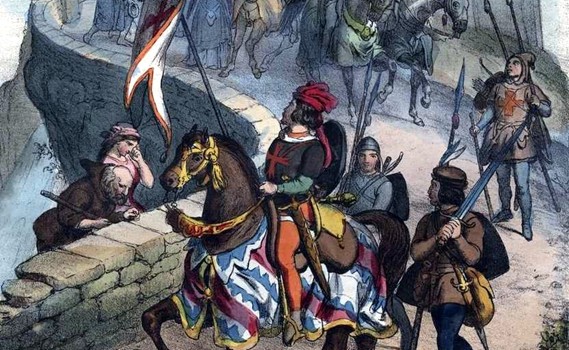
I Lombardi alla prima crociata
Debuting at La Scala in Milan on the 11th of February 1843,
Giuseppe Verdi's I Lombardi alla prima crociata
is a grand opera in four acts. Temistocle Solera wrote the
libretto, drawing inspiration from Tommaso Grossi's epic
poem. Set against the backdrop of the First Crusade, the
story features a complex plot of love, betrayal, and redemption.
The central figure is Arvino, a Lombard knight, caught between
his love for the virtuous Giselda and the manipulative schemes
of his own brother, Pagano. Driven by jealousy and ambition,
Pagano seeks revenge on Arvino, manipulating political factions
and exploiting the fervor of the Crusade for his own gain.
Throughout the story, Arvino faces exile, war, and even
a supposed death, with Giselda's unwavering love and faith
offering him a constant source of strength. Musically, the
opera showcases Verdi's developing talent. The score is
rich and diverse, featuring powerful choral pronouncements
during scenes of war and religious fervour, alongside the
intimate tenderness of love duets between Arvino and Giselda.
Verdi incorporates grand ballets, a popular feature of the
time, adding spectacle to the production. The opera initially
achieved success and solidified Verdi's position in the
Italian operatic scene. However, compared to his later masterpieces,
it's performed less frequently today. This is partly due
to the historical context of the libretto, which reflects
19th-century nationalism that may not resonate as strongly
with modern audiences. Despite this, the opera remains significant
in Verdi's development, foreshadowing the powerful dramatic
and musical elements that would define his later works.
|
| |
The
Opera |
|
Characters |
|
Name |
Description |
Voice
Type |
Premiere
Cast |
|
Arvino |
son
of Folco, Lord of Rò |
tenor |
Giovanni
Severi |
|
Pagano
(hermit) |
brother
of Arvino |
bass |
Prosper
Dérivis |
|
Viclinda |
wife
of Arvino |
soprano |
Teresa
Ruggeri |
|
Giselda |
daughter
of Arvino |
soprano |
Erminia
Frezzolini |
|
Pirro |
squire
to Arvino |
bass |
Gaetano
Rossi |
|
A
prior |
a
prior of Milan |
tenor |
Napoleone
Marconi |
|
Acciano |
Tyrant
of Antioch |
bass |
Luigi
Vairo |
|
Oronte |
son
of Acciano |
tenor |
Carlo
Guasco |
|
Sofia |
wife
of Acciano, secretly christened |
soprano
|
Amalia
Gandaglia |
| Chorus
of nuns, priors, cut-throats, soldiers of the Folco Palace;
ambassadors of the Persians, Medes, Damascans and Chaldeans;
crusading knights and warriors; pilgrims, Lombard women of the
harem, virgins |
| Setting
|
|
Milan (Act I), Antioch (Act II), outskirts of Jerusalem (Act
III and Act IV), A.D. 1099. |
| Acts |
|
Act
I: The Revenge |
Role |
|
1 |
Prelude and Introduction |
'Oh nobile esempio!' |
chorus |
|
2 |
Scene |
'Qui nel logo santo e pio' |
Pagano, Arvino, Viclinda, Giselda, chorus |
|
3 |
Quintet |
'T'assale un tremito!' |
Giselda, Arvino, Pagano, Viclinda, Pirro, chorus |
|
4 |
Scena |
'Or s'ascolti' |
a prior, Arvino, Pagano, Viclinda, Giselda, Pirro, chorus |
|
5 |
Chorus |
'A te nell'ora infausta' |
chorus |
|
6 |
Recitative |
'Vergini!... il ciel per ora' |
Pagano, chorus |
|
7 |
Aria |
'Sciagurata! hai tu creduto' |
Pagano, Pirro, chorus |
|
8 |
Scene |
'Tutta tremante ancor' |
Viclinda, Arvino, Giselda |
|
9 |
Prayer |
'Salve Maria' |
Giselda |
|
10 |
Scene and Finale |
'Vieni! Già pose Arvino' |
Pirro, Arvino, Pagano, Viclinda, Giselda, chorus |
|
11 |
|
'Mostro d'averno orribile' |
Pagano, Arvino, Viclinda, Giselda, Pirro, chorus |
|
12 |
|
'Parricida' |
Arvino, Pagano, Viclinda, Giselda, Pirro, chorus |
Act
II: The Man of the Cave |
Role |
|
1 |
Chorus |
'È dunque vero?' |
chorus, Acciano |
|
2 |
Scene |
'O madre mia, che fa colei?' |
Oronte, Sofia |
|
3 |
Cavatina |
'La mia letizia infondere' |
Oronte, Sofia |
|
4 |
|
'Come poteva un angelo' |
Oronte, Sofia |
|
5 |
Scene and March |
'E ancor silenzio!' |
hermit, Pirro |
|
6 |
Duettino |
'Sei tu l'uom della caverna?' |
Arvino, hermit |
|
7 |
Hymn of the Crusaders |
'Stolto Allhà!' |
chorus, Arvino, hermit |
|
8 |
Chorus of Slaves |
'La bella straniera' |
chorus |
|
9 |
Rondò |
'Oh madre, dal cielo soccorri' |
Giselda |
|
10 |
Arioso |
'Se vano è il pregare' |
Giselda |
|
11 |
Finale |
'Chi ne salva?' |
chorus, Arvino, hermit, Giselda, Sofia |
|
12 |
Cabaletta |
'No! No! giusta causa non è' |
Giselda, Arvino, hermit, Sofia, chorus |
Act
III: The Conversion |
Role |
|
1 |
Procession |
'Gerusalem!' |
chorus |
|
2 |
Scene |
'Dove sola m'inoltro?' |
Giselda, Oronte |
|
3 |
Duet |
'Oh belle, a questa misera' |
Giselda, Oronte, chorus |
|
4 |
Scene and Aria |
'Che vid'io mai?' |
Arvino, chorus |
|
5 |
Prelude |
|
[orchestra] |
|
6 |
Scene |
'Qui posa il fianco' |
Giselda, Oronte, hermit |
|
7 |
Finale. Trio |
'Qual voluttà' |
Oronte, hermit, Giselda, chorus |
Act
IV: The Holy Sepulchre |
Role |
|
1 |
Chorus and Scene |
'Componi, o cara vergine' |
chorus, Giselda |
|
2 |
|
'In cielo benedetto' |
Oronte, chorus |
|
3 |
Aria |
'Qual prodigio!' |
Giselda |
|
4 |
Chorus |
'O signore, dal tetto natio' |
chorus |
|
5 |
War Hymn |
'Al Siloe!' |
Arvino, hermit, Giselda, chorus |
|
6 |
|
'Guerra! Guerra!' |
Arvino, hermit, Giselda, chorus |
|
7 |
Scene |
'Questa è mia tenda' |
Arvino, hermit, Giselda |
|
8 |
|
'Un breve istante' |
Pagano, Arvino, Giselda |
|
9 |
Finale Hymn |
'Te lodiamo, gran Dio' |
chorus, Arvino, Pagano, Giselda |
 |
Sources:
1. M. Conati. Giuseppe Verdi: guida alla vita e alle opere.
Pisa: ETS, 2003.
2. Giuseppe Verdi, I Lombardi [CD]. Deutekom, Domingo,
Raimondi, Lo Monaco, Malvisi et al, Royal Philharmonic Orchestra,
conducted by Lamberto Gardelli, recorded 1971, Philips, 1989.
Translation by Rosa Nardi .
|
|
|
|


