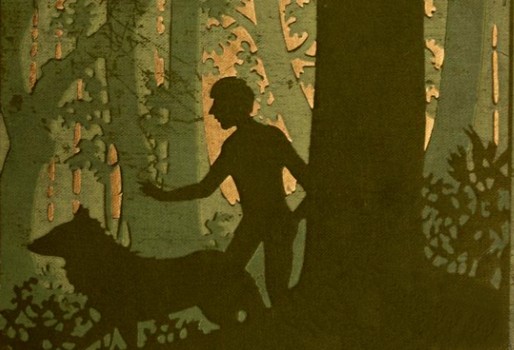
Jungle Book Cycle
Percy Grainger's Jungle Book Cycle is a substantial musical
setting of Rudyard Kipling's classic collection of stories.
Composed over nearly five decades, from 1898 to 1947, the
cycle encompasses eleven movements that utilise various
vocal and instrumental forces. Early pieces lean towards
a cappella settings for male or mixed choirs, while later
compositions incorporate a wider range of instruments including
strings, piano, harmonium, and woodwinds. The cycle depicts
various characters and scenes from Kipling's work, including
the fall of Shere Khan, the call of the jungle at dawn,
and Mowgli's conflicted feelings towards humanity. Grainger
himself described the cycle as a protest against civilisation,
reflecting Kipling's themes of nature versus societal constraints.
The cycle's performance practice offers a unique level of
flexibility. Some movements feature a core group of instruments
like piano and strings, while others allow for additional
instrumental layers, creating a dynamic and adaptable musical
experience. This characteristic, along with the vast timeframe
of its composition, imbues the Jungle Book Cycle with a
sense of growth and evolution, mirroring the development
of Mowgli himself from a helpless infant to a self-assured
young man navigating the complexities of two worlds.
|
| |
|
|
| # |
Title |
Kipling Source |
Instrumentation/Vocals |
Year Composed |
| 1 |
The
Fall of the Stone (Kipling Setting No. 16)

|
'To
be Filed for Reference' from Plain Tales from the Hills |
Strings,
harp, piano, harmonium, clarinet, two alto saxophones |
1901-04;
revised 1923 |
| 2 |
Morning Song in the Jungle (Kipling Setting No. 3)
|
'Letting
in the Jungle' from The Second Jungle Book |
A
cappella for mixed chorus |
1905 |
| 3 |
Night-song
in the Jungle (Kipling Setting No. 17)
|
'Mowgli’s
Brothers' from The Jungle Book |
A
cappella for male voices |
1898;
partially revised 1924 |
| 4 |
The
Inuit (Kipling Setting No. 5)
|
'Quiquern' from The Second Jungle Book |
A
cappella for mixed chorus |
1902;
minor revision 1907 |
| 5 |
The Beaches of Lukannon (Kipling Setting No. 20)
|
'Lukannon'
from 'The White Seal' in The Jungle
Book |
Strings,
harmonium (originally a cappella for male voices) |
1898;
revised 1941 |
| 6 |
Red Dog (Kipling Setting No. 19)
|
'Red
Dog' from The Second Jungle Book |
Male
voice (tenor) a cappella |
1941 |
| 7 |
The Peora Hunt (Kipling Setting No. 14)
|
'Cupid's
Arrows' from Plain Tales from the Hills |
Strings,
piano, harmonium, bassoon, contrabassoon,
baritone saxophone |
1906 |
| 8 |
Hunting-song
of the Seeonee Pack
(Kipling Setting No. 8)
|
'Mowgli's
Brothers' from The Jungle Book |
Strings;
male voices |
1899 |
| 9 |
Tiger! Tiger! (Kipling Setting No. 4)
|
'Tiger! Tiger!' from The Jungle Book |
Male
voice (tenor) a cappella |
1905 |
| 10 |
The
Only Son (Kipling Setting No. 21)
|
Many
Inventions |
Strings,
harp, piano, harmonium, oboe, cor anglais, two bassoons,
three clarinets, bass clarinet, two alto saxophones; mixed voices
(soprano, tenor) |
1947 |
| 11
|
Mowgli’s
Song Against People
(Kipling Setting No. 15)
|
'Letting in the Jungle' from The Second
Jungle Book. |
Strings,
piano, harmonium, two oboes, cor anglais, horn; mixed voices
(baritone, tenor) |
1903;
revised 1907 and 1923 |
| 
|
Source:
Percy Graigner, Jungle Book [CD]. Ainsley, Wilson-Johnson,
Crabtree, Polyphony, The Polyphony Orchestra, conducted by
Stephen Layton, recorded 1996, Hyperion Records Limited, 2011.
|
|


