
|
|
|
|||||||||
 |
||||||||||
| (12) | ||||||||||
|
Fadrique Álvarez
de Toledo
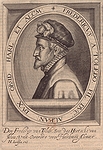
4th Duque de Alba de Tormes (1537–85) Biographical 4th Duque de Alba de Tormes, Grandee of Spain 1582–85† 6th Marqués de Coria 1548 4th Conde de Salvatierra de Tormes 1582–85† 3rd Conde de Piedrahita 1582–85† 8th Señor de Valdecorneja 1582–85† 5th Señor de Huéscar 1582–85† Commander mayor of Castile in the Order of Calatrava Fadrique’s life was constantly overshadowed by the towering figure of his father, a man whose political and military prowess made him one of the most powerful figures of the Spanish Habsburg court. From the moment Fadrique became his father’s heir, he carried the immense weight of living up to the expectations placed upon him. The Duke of Alba was determined that his son would inherit not just his title but also his legacy, becoming a true Álvarez de Toledo, worthy of the Alba name. However, Fadrique lacked his father’s commanding character and indomitable will. This mismatch between father and son led to a reputation for ineptitude, one that was often amplified by Ruy Gómez de Silva, a rival of the Duke of Alba at the court of Philip II, who used every opportunity to tarnish Fadrique’s name. The young man’s reputation for being irresponsible and dissolute, combined with his earlier indiscretions, such as the scandalous courtship of Magdalena de Guzmán in 1566, made it difficult for him to gain favour in the eyes of King Philip II, who never held any real affection for him. The Duke of Alba, despite his own vast influence, seemed unable to protect his son from the many pitfalls that arose, even when Fadrique was sent to join him in military campaigns in the Netherlands. Fadrique's military career, which began under the tutelage of his father in Naples in 1555, was an attempt to emulate the success and renown of the Duke of Alba. Although he was assigned to various duties, including commanding troops in the Netherlands, his leadership abilities were often questioned, and his reputation never truly recovered from his early failures. One of the most significant turning points in his military career came during the siege of Haarlem in 1573, where his leadership faltered. The harsh winter, combined with the determined resistance of the Dutch, turned the siege into a protracted disaster for the Spanish forces. As the months dragged on, Fadrique's inability to break the resistance led to growing doubts about his competence. His father, worried that Fadrique might abandon the siege, and, fearing the loss of honour, sent a stern message reminding his son of his duty. Despite Fadrique’s eventual success in forcing the city’s surrender, the prolonged siege only further damaged his reputation, both within the Spanish military and among his superiors. The failure of the Haarlem campaign, coupled with his subsequent setbacks, including the ill-fated siege of Alkmaar, marked the beginning of Fadrique’s downfall. His failures were used by his father's enemies at court to discredit both the Duke of Alba and his son, and by 1576, Fadrique was exiled to Tordesillas. There, he faced further humiliation, as his enemies continued to exploit his past mistakes, including a long-buried scandal involving a marriage promise to Magdalena de Guzmán. Fadrique’s secret third marriage to his cousin in an attempt to salvage his reputation only further enraged King Philip II, leading to the Duke of Alba’s exile as well. In the final years of his life, Fadrique was in poor health and broken by years of exile and failed military campaigns. Place of third marriage: Alba de Tormes Place of death: Alba de Tormes Son of Fernando Álvarez de Toledo and María Enríquez de Guzmán, he was married firstly to Guiomar de Aragón in 1555, secondly to María Josefa Pimentel in 1562, and thirdly to María de Toledo, having had issue by his third wife: • Fernando (see) |
||||||||||
 |
||||||||||
 |
||||||||||


