|
|
|
|||||||||
 |
||||||||||
 |
||||||||||
 |
||||||||||
Death
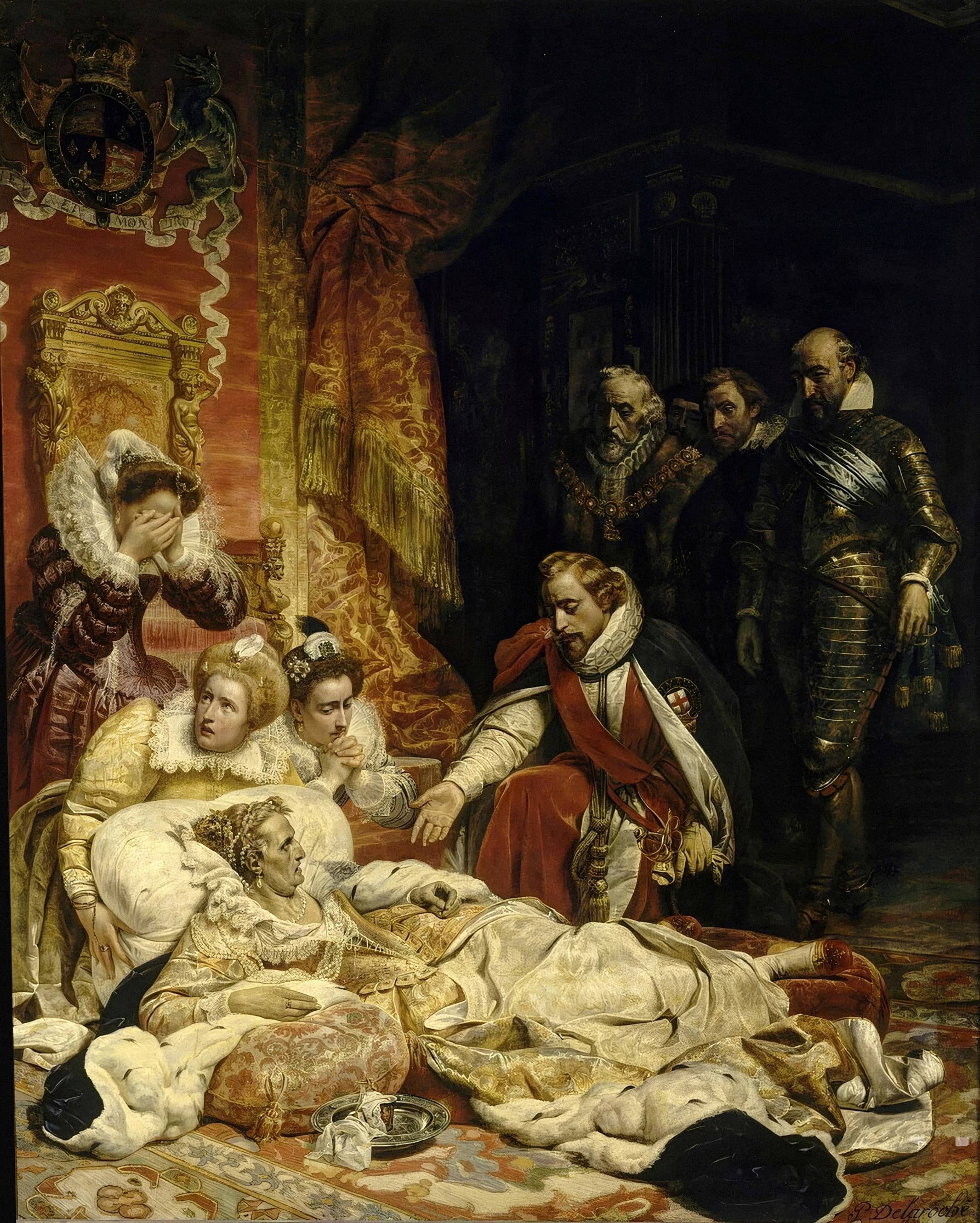
of Queen Elizabeth I Oil on canvas, 4.22 x 3.43 m., by Paul Delaroche, 1828 Musée du Louvre, Paris |
||||||||||
| The dying queen is depicted as a monarch surrounded by courtiers and ladies-in-waiting, their expressions of grief and solemnity emphasising the weight of the moment. The work belongs to the 19th-century academic tradition, characterised by historical exactitude, theatrical composition, and a highly polished surface. The technique employs dramatic lighting, rich costume detail, and a careful arrangement of figures to heighten emotional impact and narrative clarity. Though not strictly historically accurate, Delaroche chose figures whose presence reflects the emotional and political legacy of Elizabeth’s reign. Robert Cecil, Elizabeth’s trusted and by then dominant principal secretary, is believed to be the man kneeling at her side, while the figures standing behind him are thought to include members of the Privy Council as well as a symbolic portrayal of William Cecil, Lord Burghley, her long-serving chief minister who had died before her. |
||||||||||
 |
||||||||||