


Amazon
Ads |


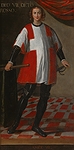
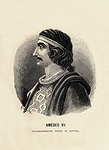
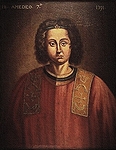
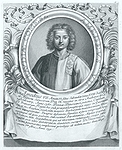
Amédée
VII de Savoie
18th Comte de Savoie
(1360–91)
Other names: the Red Count
Biographical
18th Comte de Savoie 1383–91†
Duc de Chablais 1383–91†
Duca d'Aosta 1383–91†
Marchese di Susa 1383–91†
Marchese in Italia
1383–91†
Marchese d'Ivrea
1383–91†
Comte de Nice 1388–91†
Conte di Ventimiglia 1388–91†
Comte de Maurienne
1383–91†
Baron de Faucigny
1383–91†
Baron de Vaud 1383–91†
Baron de Gex 1383–91†
Seigneur de
Romont
1383–91†
Seigneur de
Baugé
1383–91†
Seigneur de Faucigny 1383–91†
Seigneur de Barcelonnette
Signore di Cuneo
Seigneur de Bresse 1383–91†
Seigneur de Bugey 1383–91†
Seigneur de Valromey 1383–91†
After succeeding his father at twenty-three years of age, Amadeus was
soon called by Charles VI of France to his assistance against the Flemish
and the English, who were besieging Ypres. Amadeus led seven hundred lances
to the king's camp, and the combined forces, after relieving Ypres, laid
siege to Bourbourg. During the siege, single fights, after the fashion
of chivalry, took place by challenge between Count Amadeus and several
English knights, among others, the Earl of Arundel and the Earl of Pembroke,
in which Amadeus was victorious. The garrison of Bourbourg having capitulated,
Amadeus accompanied the English garrison to England, where he was received
with great honour. He was styled the 'Red Count' from the colour of his
armour. On his return to his own states, he made the peaceful and important
acquisition of the county of Nice which had been disputed between Ladislaus
of Naples and Louis II of Anjou. The people of Nice, weary of contention,
gave themselves up to Amadeus, proclaiming him their sovereign in 1388.
By this acquisition, the dominions of Savoy reached from the banks of
the Leman lake to the shores of the Mediterranean. In
1391, Amadeus, whilst hunting the boar in the forest of Lornes, near Thonon
in the Chablais, fell from his horse, and received a dangerous wound in
the thigh, of which he soon after died. A suspicion arose that his wound
had been poisoned, and his physician, Peter of Stupinix, was executed
for it at Bourg en Bresse, but, some time after, he was declared to have
been innocent of the charge. Six years later, Gerard, lord of Estavayer,
accused Otho, lord of Granson, of having poisoned Count Amadeus, and offered
to prove it by single combat. It is said that jealousy was the cause of
Gerard's accusation. The duel took place at Bourg en Bresse in 1397, in
the presence of numerous spectators. Otho, who was much older than his
antagonist, was killed, and the people fancied that to be an evident proof
of his guilt. The new Count of Savoy took possession of Granson and its
territory.
Alternatively, his death was attributed to poisoning from medication
used to treat baldness.
Place of birth: Château de Chambéry
Place of marriage: Paris Hôtel Saint-Pol
Place of death: Château de Ripaille, Thonon
Place of burial: Hautecombe Abbey
Son of Amedée
VI de Savoie and Bonne de Bourbon.
He married Bonne de Berry in 1377, and had issue. He also had illegitimate
issue.

Families | Lands | Abbreviations and Symbols


© 2024 The Universal Compendium