
|
|
|
|||||||||
 |
||||||||||
| (2859) | ||||||||||
| Eugène
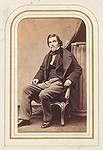
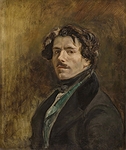
Delacroix (1798–1863) Other names: Ferdinand-Eugène-Victor Biographical Delacroix, one of the greatest French Romantic painters, was influential in the development of Impressionism and Post-Impressionism. Some believe that Delacroix’s real father was the politician Charles-Maurice de Talleyrand-Périgord, partly due to their striking physical resemblance. This theory is supported by the fact that Delacroix received continuous support from the French government, even though his art was considered unconventional. Delacroix's childhood was carefree, and he grew up with a strong admiration for his father. He initially pursued classical studies before studying under the academic painter Pierre-Narcisse, Baron Guérin, in 1815, and mingling with artists such as Antoine-Jean Gros and François Gérard. Influenced by Romanticism, he was inspired by figures such as Théodore Géricault, Richard Parkes Bonington, Frédéric Chopin, and George Sand, though he avoided the more public conflicts of the movement. He first exhibited at the Paris Salon of 1822 with his masterpiece Dante and Virgil in Hell. Delacroix was heavily influenced by Romantic poets such as Lord Byron and drew inspiration from subjects such as Dante, Shakespeare, and medieval history. His early success came with a major exhibition at the Salon in 1824, where he demonstrated his ability to convey powerful emotions. He was influenced by English painters such as Constable and Bonington, whose techniques shaped his own approach to light and colour. In 1825, Delacroix travelled to London, where he further refined his technique, drawing inspiration from artists such as Turner and Lawrence. By the late 1820s, he had produced several important works that established his reputation. He also experimented with lithography, creating illustrations that displayed his versatility. A key turning point in his career came with his depiction of the July Revolution, blending allegory with contemporary realism. His travels to Morocco, Algeria, and Spain in 1832 deeply impacted his art, leading to a new focus on North African subjects and a richer use of colour. Delacroix went on to receive prestigious commissions, including murals for government buildings, marking his final contribution to the Baroque tradition of ceiling painters. In his later years, he produced a variety of works, including portraits and large-scale depictions of animals, and his extensive collection of drawings and journals influenced future generations of artists. Place of birth: Charenton-Saint-Maurice, France Place of death: Paris Son of Charles-François Delacroix (?) and Victoire Oeben. |
||||||||||
| |
||||||||||
  |
||||||||||
| |
||||||||||
 |
||||||||||
|
||||||||||


