
|
|
|
|||||||||
|
Emanuel
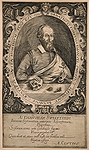
Sweerts (1552–1612) Biographical Sweerts, a Dutch nurseryman active at the beginning of the seventeenth century, had settled in Amsterdam by 1584, where he amassed a notable collection of rare birds, stones, and flowers, which he also traded. His flower nursery was particularly renowned, supplying live flowers for the gardens of Emperor Rudolf II in Vienna. Having received exotic plants from merchants returning from Africa, Asia, and the Americas, Sweerts decided in 1612 to produce Florilegium amplissimum et selectissimum to advertise his wares at that year’s Frankfurt Fair, one of the largest trade fairs in Europe. The book, which depicts around 560 bulbs and flowers, contains 110 plates, including his portrait at the age of 60, accompanied by a caption from A. Clutius. However, the plates were not taken from plants in Sweert’s nursery but were instead reproduced from those used by Johann Theodor de Bry in his Florilegium novum of 1612, which had in turn been copied from Pierre Vallet’s florilegium of the gardens of the French king Henry IV (Le Jardin du roy tres Chrestien Henry IV, 1608). Sweert's Florilegium proved highly popular and went through six editions before 1647, with subsequent editions appearing in 1614, 1641, and 1647. Place of birth: Zevenbergen Place of death: Amsterdam Son of Jan Joost. Sweerts and Maria N, he married Margriet van der Stegen, and had issue. |
||||||||||
| |
||||||||||
 |
||||||||||
| |
||||||||||
|


