|
|
|
|||||||||
 |
||||||||||
| (2803) | ||||||||||
| Samuel-Jean
Pozzi
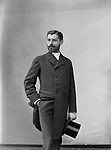
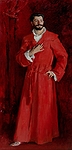
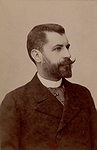
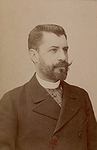
(1846–1918) Other names: 'Siren', 'Doctor God' Biographical Grand Officer of the Legion of Honour 1914 Commandeer of the Legion of Honour 1904 Officer of the Legion of Honour 1894 Knight of the Legion of Honour 1886 Senator for Dordogne 1898 Member of the Academy of Medicine in Paris 1896 President of the Society of Anthropology 1888 Member of the Society of Anthropology 1870 Hailing from a Huguenot Swiss-Italian family, Pozzi was a pioneering French physician, widely celebrated as the father of modern French gynaecology and a central figure of the Belle Époque. Known for his medical brilliance, personal charm, and striking appearance, Pozzi left an indelible mark on both the scientific and cultural landscapes of his time. In 1864, he enrolled in the Medical School of Paris, where he distinguished himself with a doctoral dissertation that earned him the Gold Medal from the Faculty of Medicine. He later held various appointments as an intern. When the Franco-Prussian War was declared in 1870, he joined the second-aid staff of the Military Health Service. By 1875, he had become a professor at the Medical School of Paris and went on to hold several notable positions, including surgeon to the public lunatic asylum of the Seine Department in 1874, director of the Surgical Department at the Lourcine Hospital in 1883, and professor of the first Chair of Gynaecology at the Medical School of Paris in 1901. His career spanned surgery, gynaecology, anthropology, and politics. Pozzi published more than 400 scientific works, including the influential Treatise of Clinical and Operative Gynaecology, published in 1890, which was translated into six languages. He advocated for women’s comfort and dignity during medical examinations—an unusually progressive stance for his time—and pioneered techniques in abdominal surgery, including France’s first successful gastroenterostomy. His contributions extended beyond medicine. He served as a senator for his home region, was an avid anthropologist, a passionate art collector, and a patron of artists. Pozzi believed that art could heal, and he integrated this belief into his hospital work by commissioning paintings to adorn the walls of public hospitals. In his personal life, he captivated many of the era’s leading women—from actresses to poets—forming deep friendships and passionate affairs. Among his closest companions was the actress Sarah Bernhardt, who affectionately called him 'Doctor God'. However, his charisma didn’t always endear him to those at home. His wife, Thérèse Loth-Cazalis, her domineering mother, and their daughter Catherine viewed him with distance, in part due to his many extramarital affairs. Pozzi’s life ended dramatically. After being shot by a former patient who falsely blamed him for impotence, he dictated his own surgery, refusing anaesthesia. Though he remained lucid and directed the operation, he succumbed to internal bleeding. His death shocked the Parisian elite, with Marcel Proust and other luminaries mourning the loss of a man they saw as brilliant, beautiful, and kind. Today, Pozzi is perhaps best remembered visually through his portrait by John Singer Sargent. He stands as a symbol of intellect, elegance, and sensuality—an unforgettable figure whose legacy transcends disciplines and decades. Place of birth: Bergerac, Dordogne Place of death: Paris Place of burial: Bergerac, Dordogne Son of Samuel Pozzi and Ines Escot-Meslon, he married Thérèse Loth-Cazalis in 1879, and had issue. |
||||||||||
| |
||||||||||
| |
||||||||||
 |
||||||||||
|
||||||||||