|
Amazon Ads |


'Ali
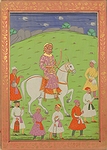
Mardan Khan
(–1657)
Other names: Baba-ye tani
Positions Held
Governor of Kandahar
1624
Governor of Kashmir
Governor of Kabul
Governor of Kerman 1624–25
Governor of Lahore
Amir-ul-Umara
Yar-i-wafadar
Biographical
A native of Persia,
'Ali Mardan Khan was
in the service of Shah Abbas I,
but finding himself
exposed to much danger
(apparently, he was falsely
charged with embezzlement)
from the tyranny of Abbas'
successor, Shah Safi, he gave up the place to the emperor Shah Jahan,
and himself took refuge at Delhi in 1637. He was received with great honour,
was created Amir-ul-Umra, and was employed in various wars and other duties.
In 1646 sent against
the Uzbeks conquer Balkh and Badakhshan.
He excited universal
admiration at the court by the skill and judgment of his public works,
of which the canal which bears his name at Delhi still affords a proof,
and the taste and elegance he displayed on all occasions of show and festivity.
He is believed to have introduced the bulbous Tartar dome into Indian
architecture.
He died of dysentery
when he was on his way to Kashmir, and was buried in his mother's mausoleum.
His mansab awards included 5,000/5,000, 6,000/6,000, and 7,000/7,000.
Place of death: Macchiwar
Place of burial: Lahore
 |
Sources
1. H.G. Keene. An Oriental Biographical Dictionary Founded on Materials Collected by Thomas William Beale. London: W. H. Allen & Co., Limited, 1894.
2. M. Soroush. 'Ali Mardan Khan. Encyclopaedia Iranica, Aug. 2011.
3. Muhammad Afzal Khan, 1987. Iranian Nobility Under Shahjahan and Aurangzeb. Thesis. Aligarh Muslim University, Aligarh.
Families | Lands | Abbreviations and Symbols