Lithuanian
lands were united under Mindaugas in 1236, marking the beginning
of a centralised Lithuanian state. Over the next century,
Lithuania expanded significantly through conquest and alliances,
encompassing most of present-day Belarus and Ukraine. By the
late 14th century, it had become the largest state in Europe.
In 1386, Lithuania entered into a dynastic union with Poland
through the marriage of Grand Duke Jogaila to Queen Jadwiga,
leading to a shared monarchy. This partnership culminated
in the formal establishment of the Polish-Lithuanian Commonwealth
in 1569, a dual state that endured until its partition by
neighbouring powers in 1795. Lithuania regained independence
after World War I, only to be annexed by the USSR in 1940—a
move widely condemned and never recognised by the US and many
other countries. Lithuania declared independence in 1990,
becoming the first Soviet republic to do so, though Moscow
acknowledged this only in 1991. Russian troops fully withdrew
in 1993. Since then, Lithuania has transformed its economy
and strengthened ties with Western institutions, joining NATO
and the EU in 2004, adopting the euro in 2015, and becoming
a member of the Organisation for Economic Co-operation and
Development in 2018.
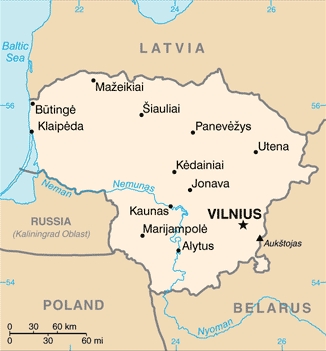
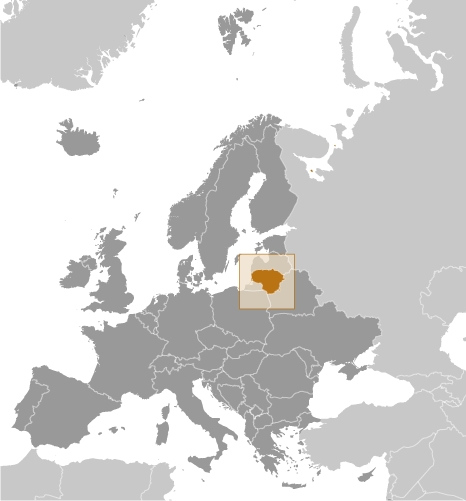
Location: Eastern Europe, bordering the Baltic Sea, between
Latvia and Russia, west of Belarus
|