


Amazon
Ads |
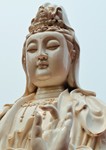


Maitreya
Biographical
Maitreya is the name of the future Buddha. In one of the works included
in the Pali canon, the Digha Nikaya, a prophecy is put into the
Buddha’s mouth that after the decay of the religion another Buddha,
named Metteyya, will arise who will have thousands of followers instead
of the hundreds that the historical Buddha had. This is the only mention
of the future Buddha in the canon. For some centuries we hear nothing
more about him. But when, in the period just before and after the Christian
era, some Buddhists began to write in Sanskrit instead of Pali, they composed
new works in which Maitreya (the Sanskrit form of Metteyya) is more often
mentioned, and details are given as to his birthplace and history. These
are entirely devised in imitation of the details of the life of the historical
Buddha, and have no independent value. Only the names differ. The document
in which the original prophecy occurs was put together at some date during
the 1st century after the Buddha’s death. It is impossible to say
whether tradition was, at that time, correct in attributing it to the
Buddha. But whoever chose the name (it is a patronymic or family, not
a personal name), had no doubt regard to the etymological connexion with
the word for 'love', which is Metta in Pali. This would only be one of
those punning allusions so frequent in Indian literature. Long
afterwards, probably in the 6th or 7th century, a reformer in south India,
at a time when the incoming flood of ritualism and superstition threatened
to overwhelm the simple teaching of the earlier Buddhism, wrote a Pali
poem, entitled the Anagata Vamsa. In this he described the golden
age of the future when, in the time of Metteyya, kings, ministers, and
people would vie one with the other in the maintenance of the original
simple doctrine, and in the restoration of the good times of old. The
other side also claimed the authority of the future Buddha for their innovations.
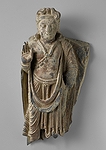
Statues of Maitreya are found in Buddhist temples, of all sects, at the
present day; and the belief in his future advent is universal among Buddhists.
Families | Lands | Abbr. and Symbols


© 2024 The Universal Compendium