|
|
|
|||||||||
 |
||||||||||
 |
||||||||||
 |
||||||||||
|
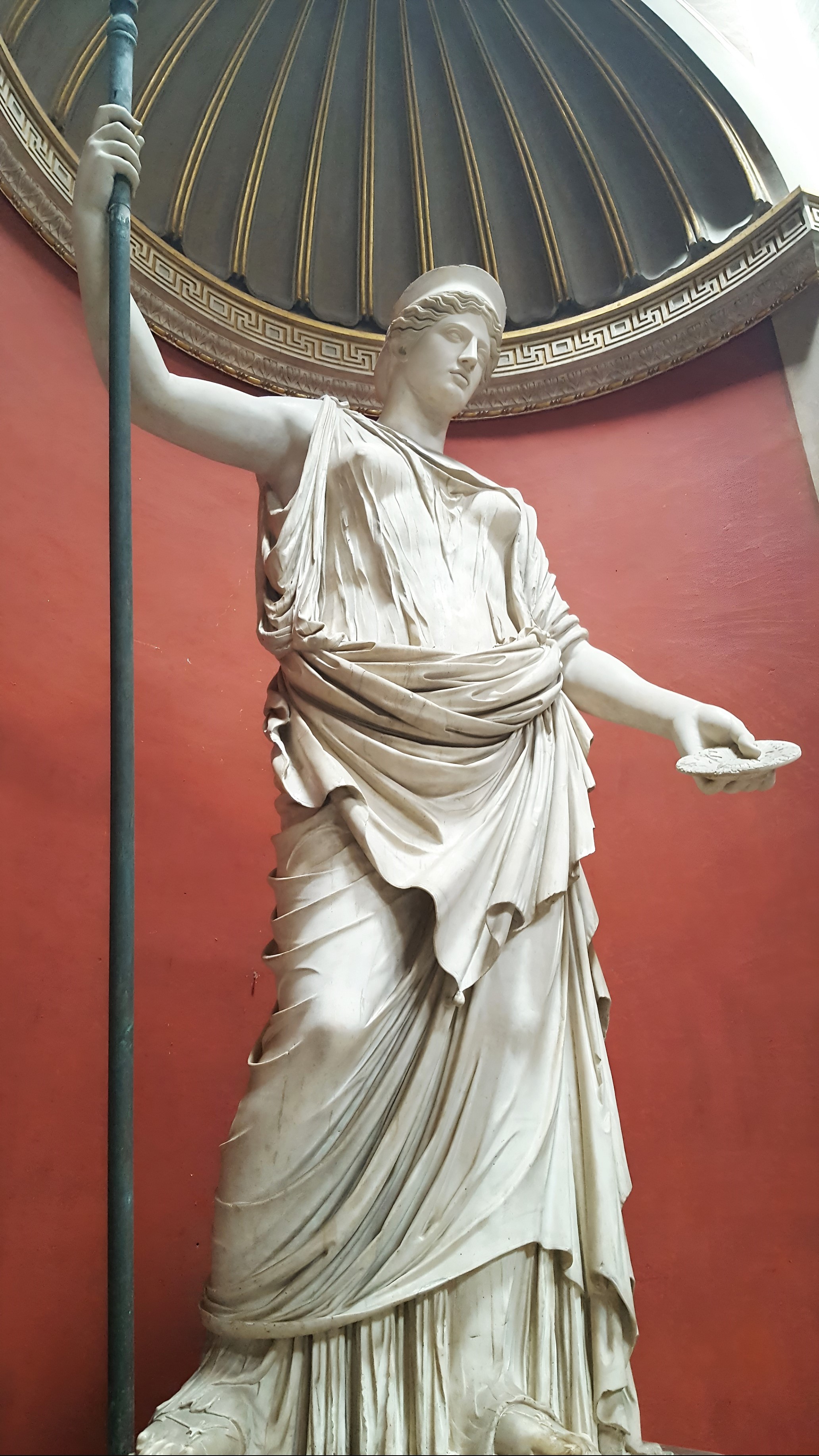
Barberini Hera |
||||||||||
 |
||||||||||
|
The statue, also known as
the Barberini Juno, was discovered
in Rome, on the Viminal Hill, during excavations initiated by
Cardinal Francesco Barberini. It is in remarkably good condition;
only the arms, which were originally crafted and attached
separately, are missing and have since been restored. However, there
was little room for error in the restoration. The head is
exceptionally well preserved and intact, apart from the nose, which
is a modern addition. Both the head and part of the bare chest were
carved from a separate block of marble and inserted into the main
body. The feet, too, were attached separately; the left foot is a
modern restoration. Assembling large marble statues from multiple
pieces was a common and skilful practice in antiquity. It allowed
sculptors to economise on material and reduce the cost of producing
large-scale works. This statue is a Roman copy from the second
century BC, probably made for a noble’s palace, though it may have
been intended for a shrine. It replicates a lost Greek original
dating from just before or during the Peloponnesian War. The Greek
work must have gained considerable renown, as it was frequently
copied. A particularly fine example, discovered in the ruins of a
Roman villa on the Sabine Hills, is now in Copenhagen. That copy
dates from the Augustan period and lacks the diadem seen on our
statue, as it was customary in early marble sculptures to attach
such decorative elements separately in metal. The style of this
statue, as preserved in these copies, shows a clear connection to an
equally well-known representation of Aphrodite, often depicted
wearing a thin, ungirded garment. Both statues are thought to be by
the same artist. The Aphrodite is believed to trace back to
Alcamenes, the renowned pupil of Phidias, and the statue of Hera is
likely his work as well. Although the identification of the goddess
as Hera is not certain—since this type has not been definitively
associated with any known representations of Hera or Juno—it remains
highly plausible. The name Hera best aligns with the statue’s
overall concept and details. What stands before us is a powerful and
dignified figure: a noble goddess, truly a queen and ruler. She does
not lift her head arrogantly; instead, she inclines it slightly, as
if to grant the wishes of those who approach her with reverence. As
with Aphrodite, she wears a thin, loose undergarment through which
the strong contours of her body are visible, slipping off one
shoulder. However, the lower part of her figure is covered by a
thick, heavy cloak, conveying solemnity and dignity. The cloak
drapes over her left shoulder, is drawn across her back to the right
hip, and then over to the left, where it is held firmly in place by
her left elbow. It falls forward in a large triangular fold, similar
to the drapery seen in the statue of Athena of Velletri. In both
statues, this arrangement lends a distinctive majesty to the
goddess’s presence. There are further similarities with the Athena
statue in terms of stance and posture. The goddess stands on her
left foot, with the right foot drawn back, suggesting forward
movement. Both statues feature bare feet in the thick, heavy sandals
typical of gods from the Phidian period, also worn by the Athena
Parthenos. The positioning of the arms and the tilt of the head also
correspond: in the Athena statue, the raised right hand holds a
spear; in this statue, it holds a sceptre. The extended left arm
carries an object that remains uncertain, possibly a vessel for
offerings, as the restorer has conjectured. Her wavy hair, adorned
with a diadem, is brushed back and gathered in a scarf at the
back—identical to the hairstyle seen in the Aphrodite mentioned
earlier. Yet the expression of this goddess’s face differs from
Aphrodite’s tender, smiling grace. While not devoid of regal
gentleness, her gaze is serious and stern. In this way, the statue
embodies the image of Hera as portrayed in myth and poetry: the
exalted wife of Zeus, queen of the heavens, and protector of
marriage among mortals. |
||||||||||
 |
||||||||||