
|
|
|
|||||||||
 |
||||||||||
| Notre Dame Cathedral of Paris | ||||||||||
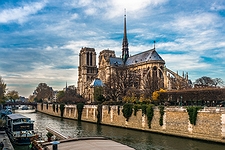
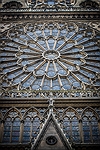
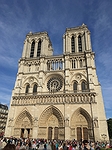
| A French Gothic cathedral, it was conceived by Bishop Maurice de Sully around 1160. He proposed building a large church on the site of two earlier churches dedicated to the Blessed Virgin and St Stephen, themselves built over a Roman temple dedicated to Jupiter. The foundation stone was laid by Pope Alexander III in 1163, and the high altar was consecrated in 1189. The cathedral features a wide nave with double aisles and transepts that project only slightly beyond the line of the aisles. Its impressive and sombre interior includes a nave arcade with cylindrical columns supporting pointed arches and shafts that carry the lofty sexpartite vaulting. The broad western façade, regarded as the finest and most characteristic in France, served as a model for many later churches. In 1239, the Crown of Thorns, a portion of the True Cross, and a nail of the Passion were deposited in the cathedral by Louis IX. The first States General was assembled here in 1302, and Mary Stuart was crowned in 1560. During the French Revolution, the treasury was despoiled, although the Crown of Thorns was transferred to the Bibliothèque Nationale and thus escaped destruction. The statues of the kings, which once adorned the porch, were destroyed in 1793 by order of the Paris Commune. Catholic worship resumed in 1802, and Napoleon crowned himself here in 1804. In 1832, public sentiment in favour of the cathedral was so strong—partly due to Hugo’s Notre-Dame de Paris—that, ten years later, the government entrusted Jean-Baptiste Lassus and Eugène Viollet-le-Duc with a complete restoration. Notre-Dame has held the status of minor basilica since 1805. In 2019, a fire broke out in the attic, destroying most of the roof, the spire (a creation of Viollet-le-Duc), and other parts of the structure. It was restored in 2024 and reopened to the public in December that year. | ||||||||||
| |
||||||||||


 |
||||||||||
|
|
||||||||||
| |
||||||||||
  |
||||||||||


