|
|
|
|||||||||
 |
||||||||||
| Charles-Auguste-Émile Durand (1837–1917) | ||||||||||
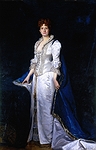
| A painter and sculptor, Durand (known as 'Carolus-Duran') was born in Lille and began studying art at the age of eight after his father recognised his artistic talent. He started at the local drawing school before studying in François Souchon's studio. In 1853, he moved to Paris but returned to Lille in 1858 due to financial constraints, making a living by painting portraits. After winning an art prize in 1859, he was able to return to Paris and study at the Académie de Beaux-Arts, where he befriended Courbet. Later, he was awarded the Wicar prize by the city of Lille, which enabled him to travel to Italy from 1862 to 1866. In 1866, Durand won a medal at the Salon for his L'assassiné, a painting purchased by the French government for the Musée de Beaux-Arts in Lille. This allowed him to reside in Spain for a year to continue his studies, where the influence of Spanish Baroque artists, particularly Velázquez, became evident in his works. In 1868, he returned to Paris, and the following year, he won another medal at the Salon for his Les Coulisses artistiques, which established his reputation and marked his distancing from Courbet's 'new painting.' From 1870 onwards, Durand became primarily a portraitist, a role that provided him with a steady income, making him one of the most celebrated artists of that genre in Paris. At the same time, he painted history subjects, nude figures, landscapes, and still lifes, was a skilled copyist, and also devoted himself to sculpture. He opened an art school in 1873 and later became one of John Singer Sargent's teachers. From 1905 until his death, Durand served as director of the French Academy in Rome. He died in Paris. | ||||||||||
| |
||||||||||
|
|
||||||||||
| |
||||||||||
  |
||||||||||


 Art
Art