
|
|
|
|||||||||
 |
||||||||||
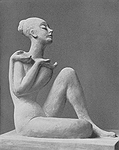
| Milly Steger (1881–1948) | ||||||||||
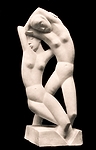
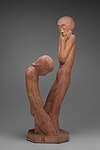
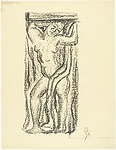
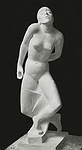
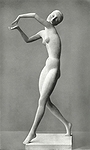
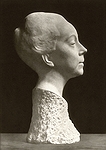
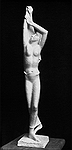
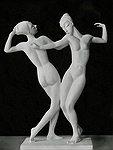
| Born in Rheinberg, Germany, Steger studied in Düsseldorf and briefly with Georg Kolbe in Berlin in 1900, followed by further studies in Florence in 1905. Her contribution to the world of art, particularly sculpture, was profound, especially in how she seamlessly integrated her work into architectural structures. Few sculptors have succeeded as she did in making their creations a natural part of buildings. Before World War I, she completed monumental stone figures for the façade of the Municipal Theatre in Hagen, chiselling each piece herself. From 1910 to 1917, she lived and worked in Hagen, surrounded by the circle of Dr Karl Ernst Osthaus, a significant industrialist of the Ruhr. In Danzig, her sculptures graced the City Hall, Savings Bank, School Building, and the Municipal Museum. After the war, Steger continued her work in Hamburg, where her monumental sculpture became part of the Cooperative Warehouse, and she also taught at the Academy in Berlin. Her art is remarkable for its ability to straddle two distinct yet equally compelling worlds. On one hand, her monumental sculptures exude a calm simplicity, while on the other, her delicate porcelain-like busts and figures radiate elegance and grace. This balance between boldness and subtlety made her work stand out among her peers. She died in Hamburg. | ||||||||||
| |
||||||||||
_th.jpg)
 |
||||||||||
|
|
||||||||||
| |
||||||||||
  |
||||||||||


 Art
Art