|
|
 |
|
||||||||
Timurid and Mughal Art |
||||||||||
Because of the vast expanse of the Timurid Empire (1370–1506),
the art that flourished during this period was shaped by a rich
confluence of Turkic, Persian, Chinese, and Mediterranean influences,
all synthesised within a Mongol cultural framework. Timur, the founder
of the empire, presided over what is regarded as one of the most
brilliant periods in the history of Islamic art, with its influence
extending from Anatolia in the west to India in the east. His successors
sustained this artistic legacy through active patronage, transforming
the eastern Islamic world into a vibrant centre of cultural production,
with Herat emerging as a key hub. Artists, architects, and scholars from
across Persia were invited to contribute to this flourishing milieu,
resulting in achievements that spanned a wide range of disciplines.
Timurid art reached exceptional heights in architecture, ceramics, wood
and stone carving, and particularly in the arts of the book—calligraphy,
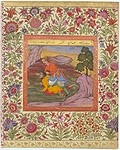
manuscript illumination, and miniature painting. Persian manuscript
illustration attained remarkable refinement under Timurid patronage,
with the Herat school marking the pinnacle of Persian painting. The
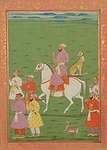
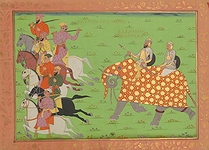
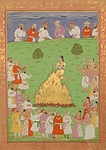
delicate, intricate style developed in Herat would later serve as the
foundation for the Mughal artistic tradition in South Asia. |
||||||||||
| |
||||||||||
 |
||||||||||